Nepal: Annapurna Circuit-Annapurna Base Camp and Everest Base Camp-Two Passes Treks (Nov 11 to Dec 27, 2015)

After almost 5 weeks hanging out with friends in Europe (see previous post), it was time to get back on the trail. So after a 12-hour flight from Paris, I landed in Kathmandu, Nepal, home of the Himalaya Mountains and Mt Everest, the highest peak in the world.

So how did I spend almost 7 weeks in Nepal? Exploring and trekking, of course!

Being my first time in Asia, I had a bit of culture shock upon arriving to the capital city of Kathmandu (population 975,453) with its unfamiliar language and customs. However, given the friendly nature of the Nepali people with their respectful greeting of “namaste” and the prevalence of English-speaking locals and travelers, I quickly adjusted. I arrived on Day 3 of Tihar, a 5-day festival that, per Wikipedia, “shows reverence to humans, the Gods, and the animals, like crows, cows and dogs, who maintain an intense relationship with humans. People make patterns called Rangoli on the floor of living rooms or courtyards using materials such as colored rice, dry flour, colored sand or flower petals outside of their house, meant to be a sacred welcoming area for the Gods and Goddesses of Hinduism.” On this particular day, kids walked shop to shop singing traditional Bhailo songs, receiving small amounts of money and candy from shop owners in return. The explosion of festive colors and sounds was a great introduction to Nepal.

While in Kathmandu, I hung out with my friend, Corey, from San Diego, and explored the city, including Durbar Square, the Monkey Temple, and Thamel, the area where most travelers stay. I even went dancing at some local clubs with friends I met at my hostel. It was a fun night of shaking my booty to a mix of American and Nepali hip hop.

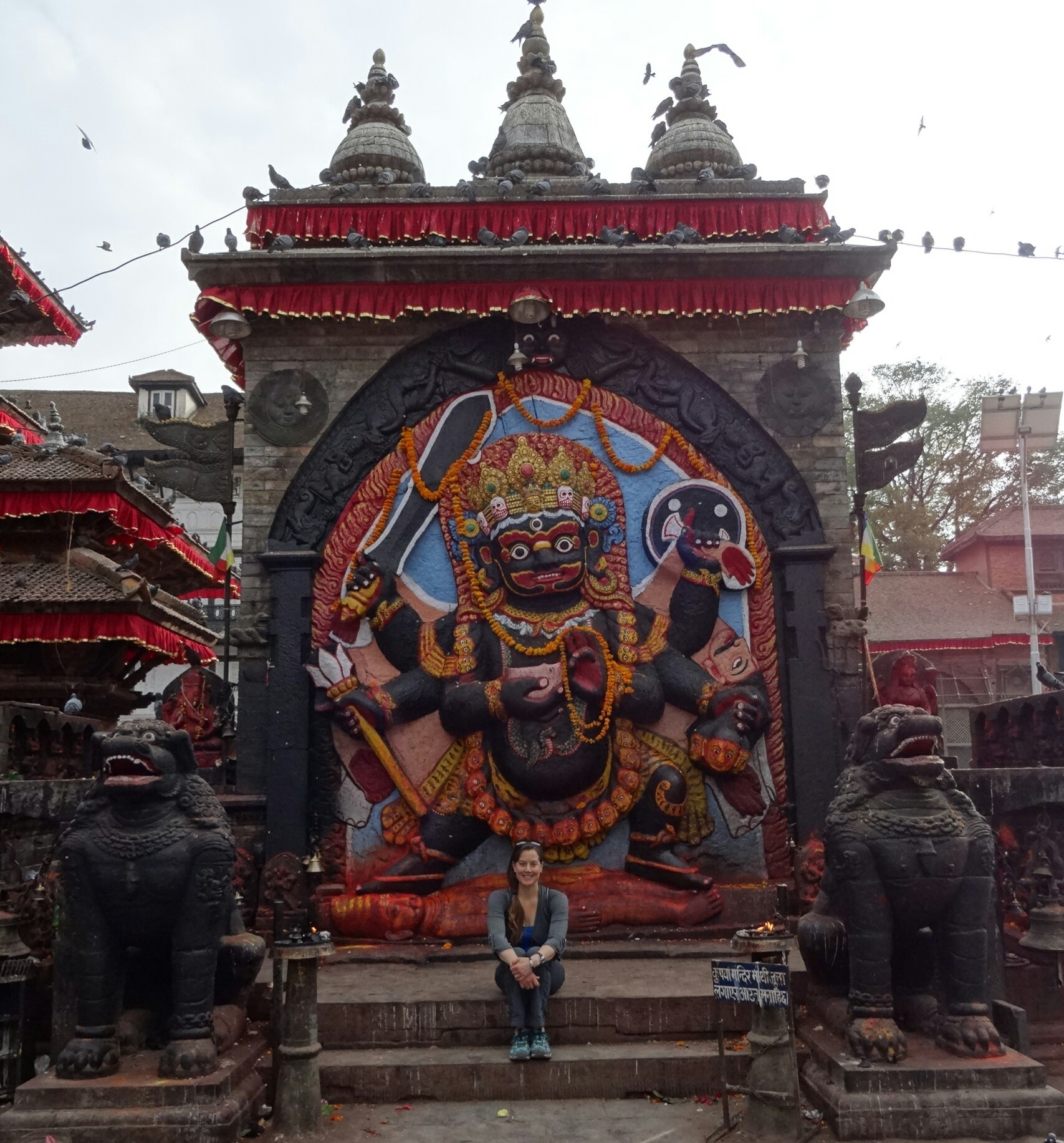
While exploring the city, I passed homes and businesses whose walls were being supported by wooden beams, large mounds of bricks, and large excavated pits interspersed among intact structures. Given the seemingly unregulated building practices in Kathmandu, it was difficult to determine if this was status quo or earthquake damage. However, locals confirmed that it was primarily damage from the 7.8-magnitude earthquake that occurred in April 2015. The earthquake had also severely damaged many of the temples of Durbar Square. It’s unfortunate that I only saw the temples post-earthquake as I could only imagine their previous significance and beauty. While the damage was still very evident around the city, rebuilding was underway. When I asked about the effects of the earthquake, the handful of Nepalis I talked to preferred to talk, with pride, about how they were rebuilding instead of about their losses. Along with being friendly, they are proud, resilient people.

Annapurna Circuit-Annapurna Base Camp (20 days, 175 mi (283 km))

After four days in Kathmandu, Corey and I, our backpacks filled with warm clothes, sleeping bags, miscellaneous items, and too many snacks, took a 9-hour bus to the small town of Bhulbhule (2,755 ft, 840 m) to start the trek.

The Annapurna Circuit-Base Camp trek is within the Annapurna Conservation Area, Nepal’s largest protected area. Per Wikipedia, the Circuit ” crosses two different river valleys and encircles nine mountains, four of which are above 26,000 ft (7925 m) and has often been voted as the best long distance trek in the world, as it crosses a wide variety of climate zones from tropics to arctic at Thorong La pass and has cultural variety from Hindu villages at the low foothills to the Tibetan culture of the high altitude valleys and mountains.” The trail went through jungle, rhododendron and pine forests, arctic scrub, and passed terraced rice fields, waterfalls, gigantic cliffs, and countess colourful Buddhist prayer flags and wheels, mani walls (piles of stone tablets engraved with Buddhist prayers), stupas (Buddhist shrines), and several beautiful gompas (monasteries). The trail also crossed numerous bridges, of which 28 were suspension bridges (I kept count), giving the feeling of being in an Indiana Jones movie.

During the trek, we passed through numerous small villages, adding to the experience by offering a peak into the daily life in these rural communities and allowing some interaction with the friendly locals. We slept each night in a village. While the lodges were typically simple, they provided a bed with warm blankets, toilets, and a shower, occasionally with hot water, and I enjoyed the luxury of a private room each night. Since the lodges were very cheap ($1-2 per night) or sometimes free, the owners expected trekkers to eat dinner and breakfast at their lodge ($2-6 per meal). The food was typically tasty but since the menu was almost identical at every lodge along the entire trek, I became less excited about my meals as time passed, especially dinner, which was typically dal bhat (a plate of rice with veggies and soupy lentils), veggie curry, or fried rice, noodle, or potato with veggies and cheese or egg. There were a few other choices on the menu (i.e., pizza, burgers, spaghetti) but I chose to eat only Nepali dishes for dinner. On a few occasions, I sampled the Nepali booze: raksi (a traditional home-brewed alcohol of millet or rice), chhaang (a fermented “beer” of barley, millet, or rice), and apple brandy. Apparently, raksi was ranked 41st on CNN’s list of the World’s 50 most delicious drinks (water was ranked 1st and mango lasse (a creamy fruit shake) was ranked 50th). These drinks tasted…interesting and they were cheap and warmed the body.

While many people hire a porter and guide for the trek, Corey and I carried our backpacks and found our own way, following a map, a guide book, and the red and white markers of the “alternative trail” painted on rocks, trees, and posts. Following the alternative trail allowed us to avoid hiking on the relatively new jeep road that parallels portions of the Circuit. For the first two days, we trekked along a river valley then finally saw the mountains. While the jungle and forests were absolutely beautiful, I couldn’t help but gasp when I got my first glimpse of the snow-covered peaks. Over the next several days, we continued along the valley, getting closer and closer to the high peaks. I never got tired of admiring the view each day. During a 2-night stop in Manang, the usual stopping point for trekkers to acclimatize before going over the high-altitude pass, I did an overnight trip to Tilicho Base Camp (13,615 ft, 4150 m) and Tilicho Lake, a glacial lake that at 16,237 ft (4949 m) is reputed among the Nepalis to be the highest lake in the world. The views of the mountains and glaciers around base camp and the lake were stunning. I couldn’t see the avalanches occurring on the slopes around the lake but it was very cool to hear them. On day 10 of the trek, Corey and I hiked up and over the pass, Thorong La, the highest point on the Circuit at 17,769 ft (5416 m). The trek up wasn’t long but much of it was steep and at that altitude, the air contained roughly 50% less oxygen than at sea level, making it noticeably harder to breathe. But the view from the top on that clear, sunny morning of the surrounding mountain peaks and the valley below was magnificent. To my astonishment, except for the tea shop guy, I was alone at the prayer flag-strewn pass for about 45 minutes until the other trekkers arrived, so was able to immerse myself in the view and the feeling of being at the highest point I’d ever stood (so far).

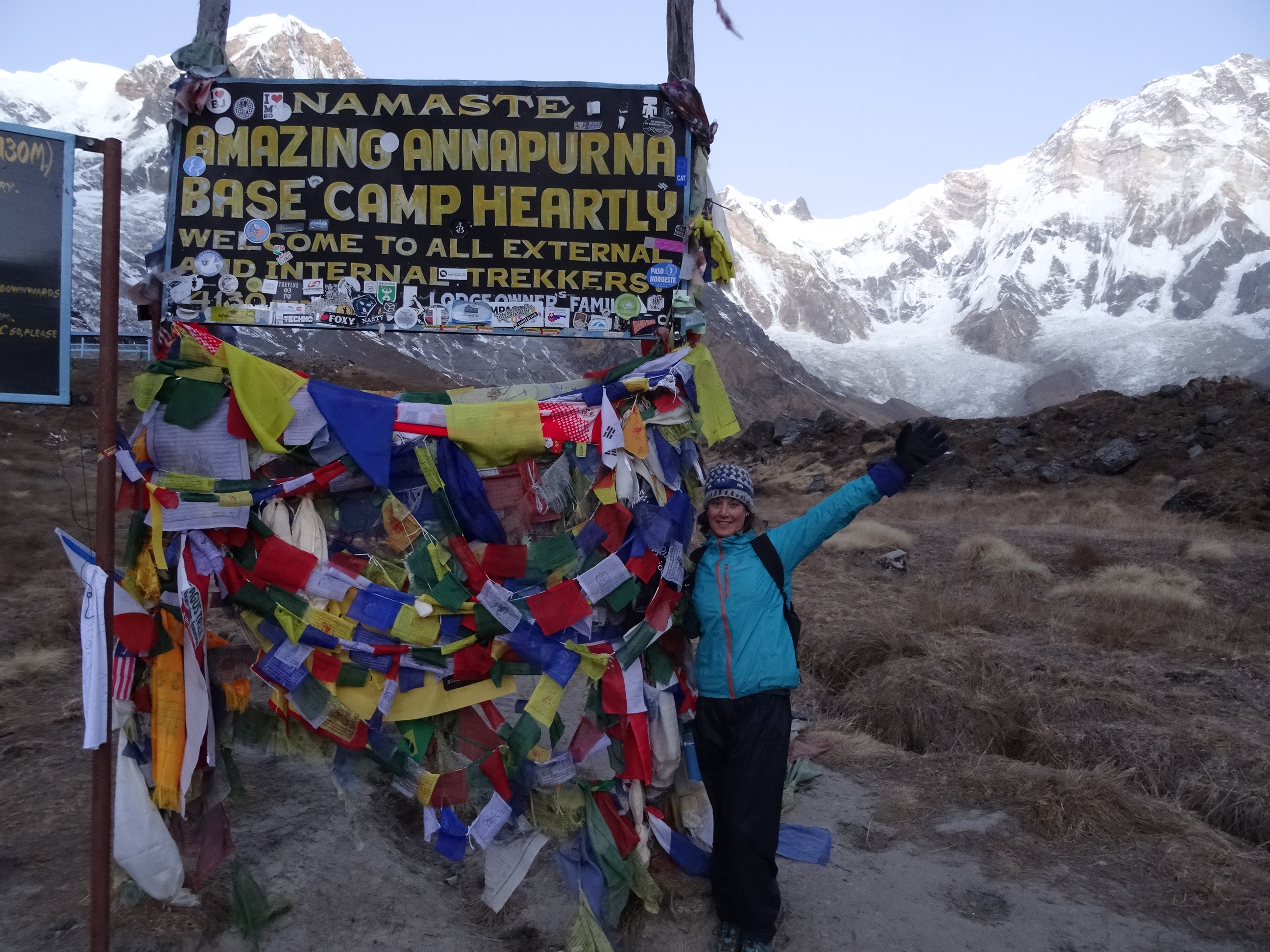
A few days after going over Thorong La, Corey flew back to Kathmandu and I continued the trek solo. We’d had a great time trekking together for 13 days! On the descent, the trail again passed through forest and jungle along a beautiful river valley. I spent a night in Tatopani to enjoy the hot springs (and temporarily thaw my chilled bones) and two nights in Ghorepani to view the light of the rising sun on about 15 snow covered peaks from Poonhill, and to enjoy a rest day (my first after 16 days of trekking). After, I started the trek up the valley to Annapurna Base Camp. Along the way, I met Herve (France) whom I hiked with for the remainder of the trek. I was especially happy to have a hiking partner for the very cold, predawn trek to Base Camp (13,550 ft, 4130m) where I viewed the light of the rising sun on the Annapurnas, this time from the opposite side as I’d seen from the Circuit. Beautiful! After enjoying the amazing view, we trekked down the valley, overnighted in Jhinudanda to enjoy the hot springs (and temporarily thaw our chilled bones), then on to Nayapul (3,510 ft, 1070 m), the end of the trek. From there, we took a 2-hour bus on a very windy road to Pokhara, a small lake-side town where many trekkers relax, eat, and celebrate after finishing an amazing trek. After roughly 175 mi (283 km) of trekking, it felt great to be warm, take multiple hot showers, relax, drink beer, and eat delicious food (that did NOT include dal bhat, curry, or fried noodles, rice, or potatoes!).

Everest Base Camp-Two Passes Trek (13 days, about 90 mi (145 km))

After two days in Pokhara and four days in Kathmandu, during which I hung out with Corey, her friend, Ele, and Ele’s adorable son, I took a 10-hour bus to the small town of Shivalaya to start my next trek. Similar to my previous trek, the Everest Base Camp-Two Passes trail passed through varying landscapes which changed from terraced rice fields, jungle, and rhododendron and pine forest to artic scrub on the ascent up the valley to the high-altitude pass then changed back to forest and jungle on the descent into another valley. The majority of the trek is within the Sagarmatha National Park, a UNESCO World Heritage Site, and home to three of the tallest ten peaks in the world: Everest (29,028 ft, 8848 m), Lhotse (27,939 ft, 8516 m), and Cho Oyu (26,906 ft, 8201 m). This area is also home to the Sherpa people who “came to the previously uninhabited region about 450 years ago from Tibet to escape war, persecution, or famine and conducted subsistence agriculture and trans-Himalayan salt trading. It has been speculated that a part of the Sherpas’ climbing ability is the result of a generic adaptation to living at high altitudes.” Hence their success climbing Everest! During the trek, I again encountered numerous colourful Buddhist prayer flags and wheels, mani walls, stupas, several beautiful monasteries, crossed many suspension bridges (I counted 14), and stayed at lodges where I ate a lot of dal bhat.

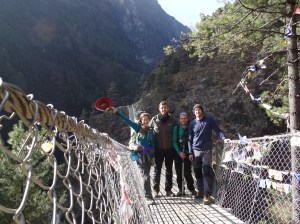
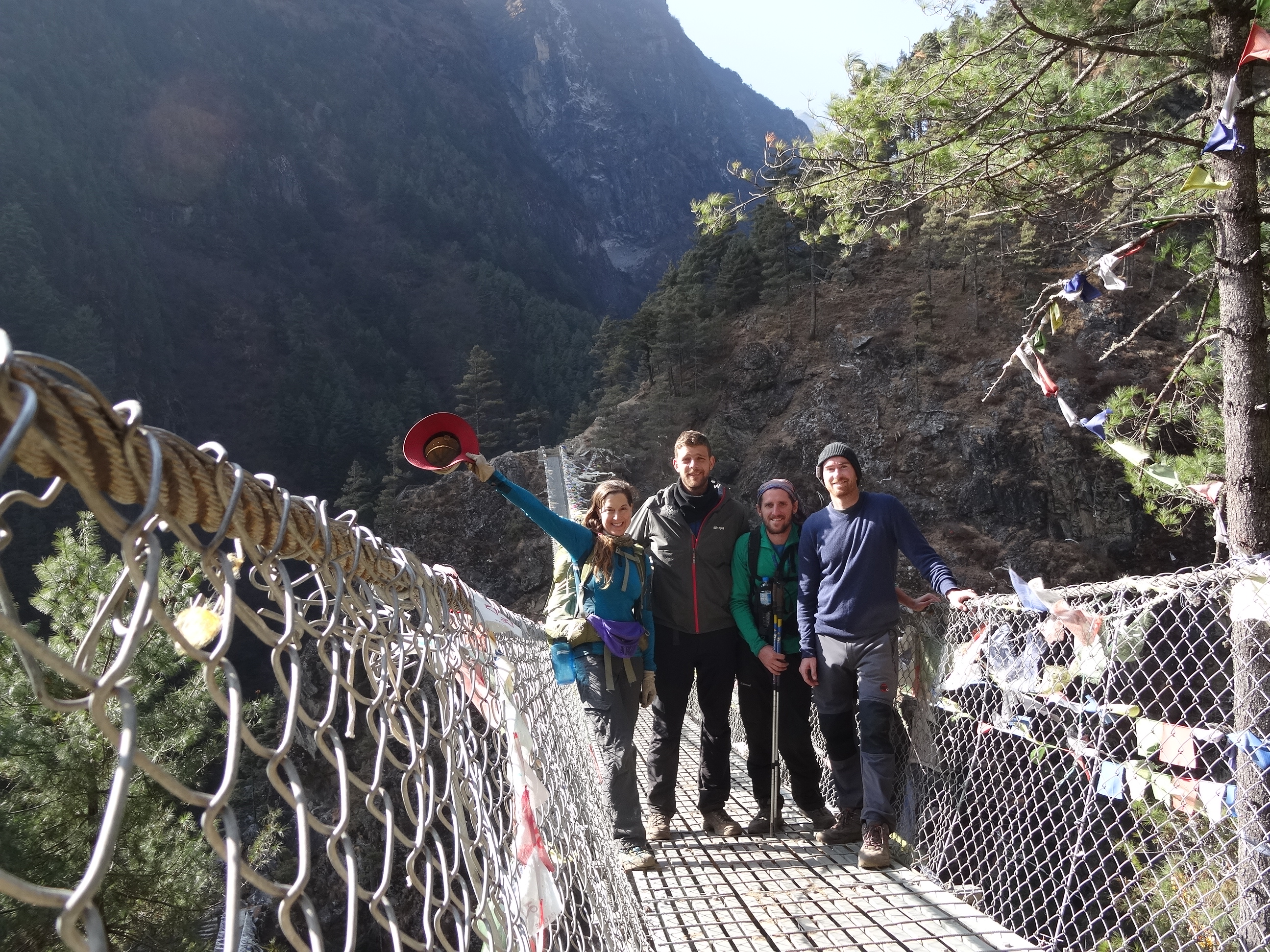
To start the trek, most people take a 45 minute flight from Kathmandu to Lukla. As there are no roads to (or in) the National Park, the only other option is to trek there. I opted to trek there starting from Shivalaya, adding about 38 mi (60 km). Although the distance is relatively short, the trail crosses three valleys, going over four passes, and added 5 days to my overall trek. Thankfully, I met Paul (UK), Guillaume (France), and Alex (US) on the bus to Shivalaya and trekked with them because I encountered only a handful of other trekkers during the first 5 days. We trekked through jungle and forest as we went up and down each valley. Then after a few days, we rounded a corner and had our first view of Everest. It was far away but it was cool to finally get a glimpse of the world’s highest peak. Along the way, we passed through many small villages, where friendly locals were going about their daily chores. Unlike my previous trek, there were signs of earthquake damage along the trail. Many of the buildings in the villages we passed through during the first several days had been extensively damaged or reduced to piles of rubble. While people were in the process of rebuilding, the effort will likely be a longterm process, especially since everything has be to carried by animal or human to these roadless areas.

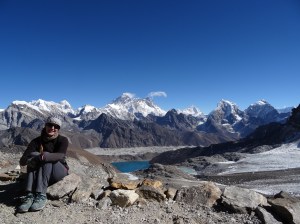
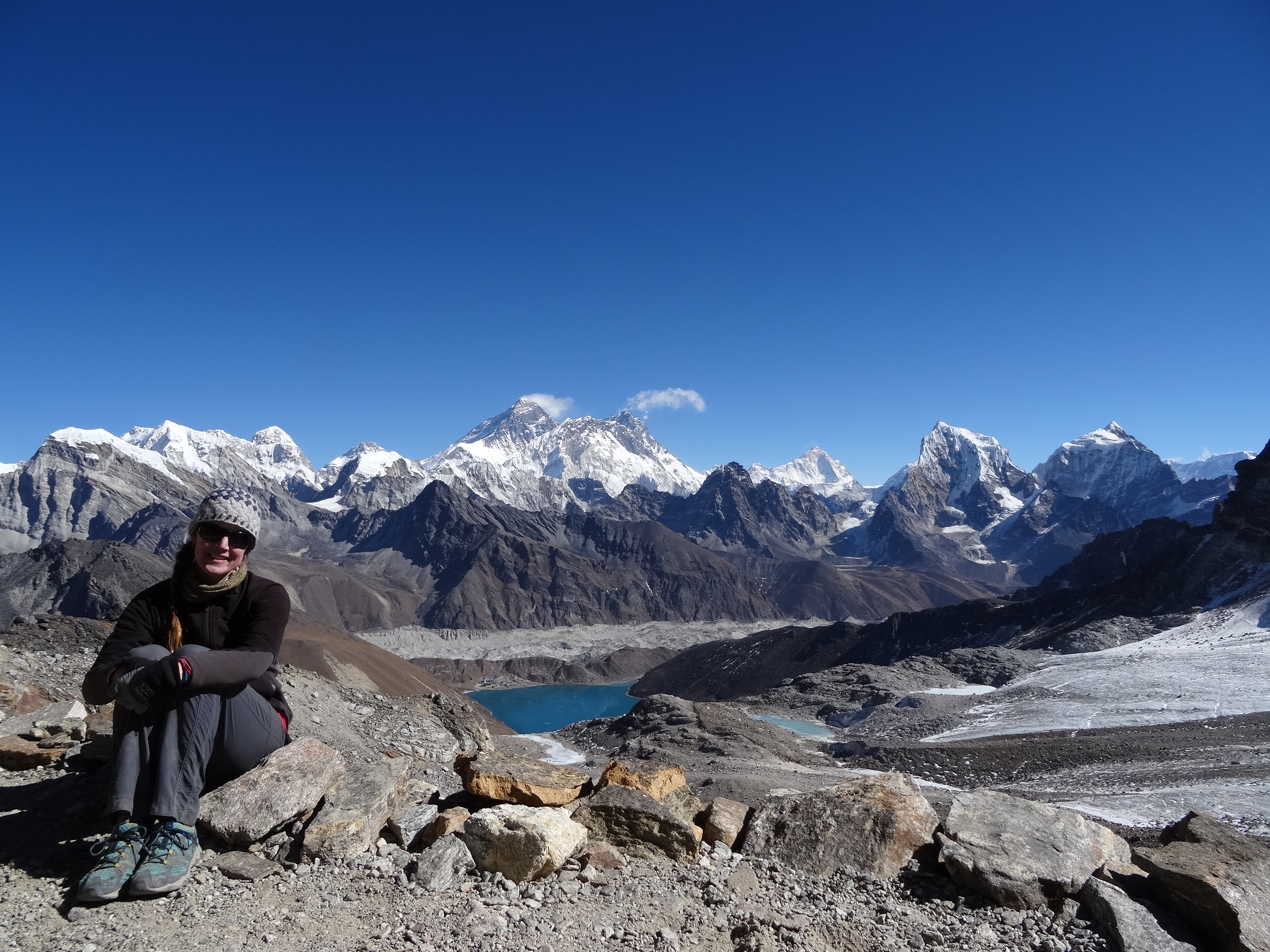
After 5 days of trekking, we arrived in Namche Bazar (11,286 ft, 3440 m) where I enjoyed a night of wifi and a last night of hanging out with the guys before saying farewell to them and starting the trek up the valley to Everest Base Camp. I spent the next 7 days above 13,800 ft (4200 m), during which I spent 3 very cold nights above 17,000 ft (5182 m). As I climbed higher in elevation, the view of the high peaks became more spectacular. In Gorek Shep (16,863 ft, 5140 m), I had an amazingly close view of Everest and many other high peaks, including Lhotse. I planned to hike the 2 hours from Gorek Shep to Everest Base Camp (17,595 ft, 5363 m) but unfortunately woke up that morning with mild altitude sickness. Instead, I hiked to a somewhat lower elevation to acclimatize more before hiking over the first high-altitude pass of the trek. Thankfully I met Thomas (US) the night before I planned to cross Cho La, an icy pass at 17,782 ft (5420 m) that would have been foolish to do alone. We ended up hiking together for the remainder of the trek including hiking to Gokyo and over the second high-altitude pass. The views from Gorek Shep were amazing but the views in/around Gokyo (15,715 ft, 4790 m), located next to a glacial lake, were even more amazing. While there, Thomas, Zhenya (Ukraine), who’d we’d met at the lodge, and I hiked along the massive glacier to several beautiful frozen glacial lakes, enjoying more spectacular views of Everest and the surrounding peaks along with way. After two very cold nights in Gokyo, we crossed the second high-altitude pass, Renjo La. The trek up to the 17,585-ft (5360-m) pass was steep and long but worth the effort. The views from Gorek Shep and Gokyo were amazing but the views from Renjo La were even more amazing! On that clear, sunny morning, we sat at Renjo La and enjoyed the stunning view of Gokyo Lake and the majestic mountains (including Everest) on one side of the pass and the view of the expansive valley and distant high peaks on the other side. From the pass, we started the 2-day trek down the river valley to return to Namche.

During the trek, I considered hiking for another 4 days to Salleri to then take a 12-hour bus or jeep to return to Kathmandu. However, by the time I reached Namche, I was finally tired of trekking and tired of being cold, very cold. So, I hiked to Lukla to fly back to Kathmandu. In Lukla, Thomas, Filip (Czech Republic), who we’d met in Gokyo, and I met Nathan, Raj and Ben (all from the UK). Thanks to Ben, we were introduced to tongba, “a turbid liquor obtained by leaching out the extract with water from the fermented mash of millet.” It was…interesting, especially since the mash of millet was served in a giant mug with a metal straw and was refilled several times with hot water. And it was free, warmed the body, and was a bonding experience among those of us who tried it. Ha!

The next morning, we all walked the short distance to the airport which consisted of one building, one runway, and parking for six small planes. The runway seemed impossibly short and sloped downhill, ending at a steep drop off to the valley below. No wonder the Lukla Airport is known as the most dangerous airport in the world. To take off, the plane revved its engines while braking then burst forward down the short runway. There was definitely some nervous laughter among the 12 passengers (tourists and locals) as our tiny plane revved up. After take off, we relaxed and enjoyed the view of the Himalayas during the short flight to Kathmandu.

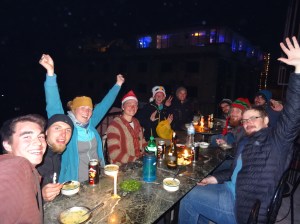
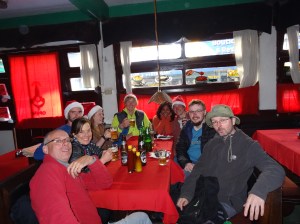
After roughly 90 mi (145 km) of trekking, I was happy to be back in Kathmandu. It felt great to be warm and clean, and to relax, drink beer, and eat delicious food (that did NOT include dal bhat, curry, or fried noodles, rice, or potatoes!). I happened to arrive on Christmas Eve and fortunately two of my fellow hostel mates, Anaj and Felix (German), had organized a potluck. So I shared a delicious Christmas Eve dinner with about a dozen other travelers, including Thomas and Filip, on the rooftop of our hostel. We even played the white elephant game, which was interesting since the gifts consisted of items from everyone’s backpack that were no longer wanted or needed. The next day, Thomas, Filip, and I met Nathan, Raj, Ben, and a few other friends, at a restaurant to share a delicious Christmas lunch. It was a very memorable and merry Christmas with good food and great friends.

Trekking in the Himalayas had been on my life list. It was amazing to be among some of the world’s highest peaks and to get a glimpse into the beautiful culture of the Nepali people. Also amazing is the fact that while the Annapurna Circuit, Annapurna Base Camp, Everest Base Camp, and Two-Passes trails are typically trekker super highways, I encountered relatively few other trekkers. Per the trekking permit office, over 20,500 people hiked the Circuit in 2014. However, in 2015, the number of trekkers on this trail was reduced by almost 50 percent. This reduction was likely due to the suspension of permits to climb Everest because of safety concerns related to the earthquake, the uncertainty about the conditions in Kathmandu and on other trails (i.e., the Circuit) resulting from the earthquake, and uncertainty associated with ongoing fuel shortages due to political conflicts between Nepal and India. While I hope, for the sake of Nepal’s struggling economy, visitation returns to normal or higher levels quickly, I have to admit I feel blessed that I was able to do these treks when I did. The fact that I was able to enjoy long stretches of the trail and stunning views, including the ones from Thorong La and Renjo La, by myself or with just a few friends is amazing and likely a once-in-a-lifetime opportunity.

My experience in Nepal was amazing and was made even more memorable by the people, locals and fellow trekkers, with whom I shared it. Thank you all for being part of my experience.

Here are a few pictures. Click the links to see the full photo albums:

Annapurna Circuit-Base Camp Trek:  https://goo.gl/photos/fcJENKwKhPSfPvsCA

Everest Base Camp-Two Passes Trek:  https://goo.gl/photos/fcJENKwKhPSfPvsCA

Enjoy!
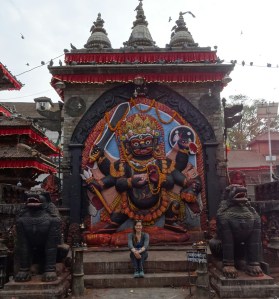
IMG_20151113_210418
In Durbar Square, Kathmandu.
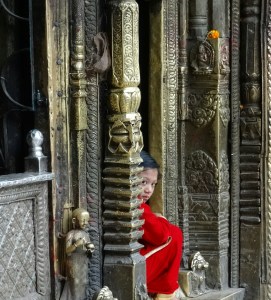
IMG_20151113_211607
Nepali girl at one of the many temples in Kathmandu.
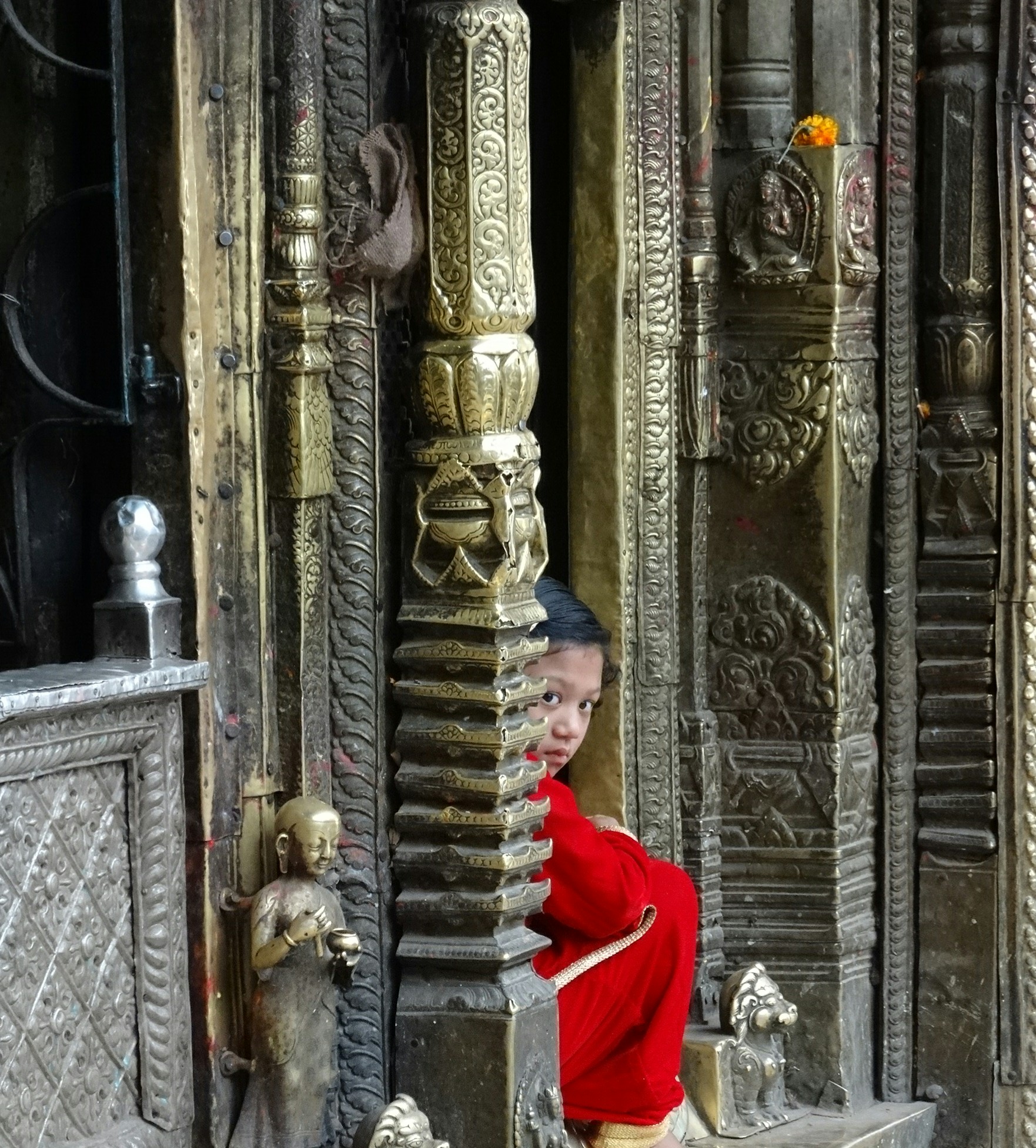
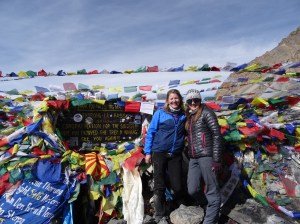
DSC04450
With Corey at the top of Thorong La (17,769 ft, 5416 m).
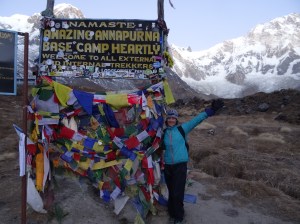
DSC04785
At Annapurna Base Camp (13,550 ft, 4130m).
DSC04983
With Guillaume, Paul, and Alex on Everest Base Camp-Two Passes Trek.
DSC05277
View of Everest and other high peaks from Renjo La (17,585 ft, 5360 m).
DSC05384
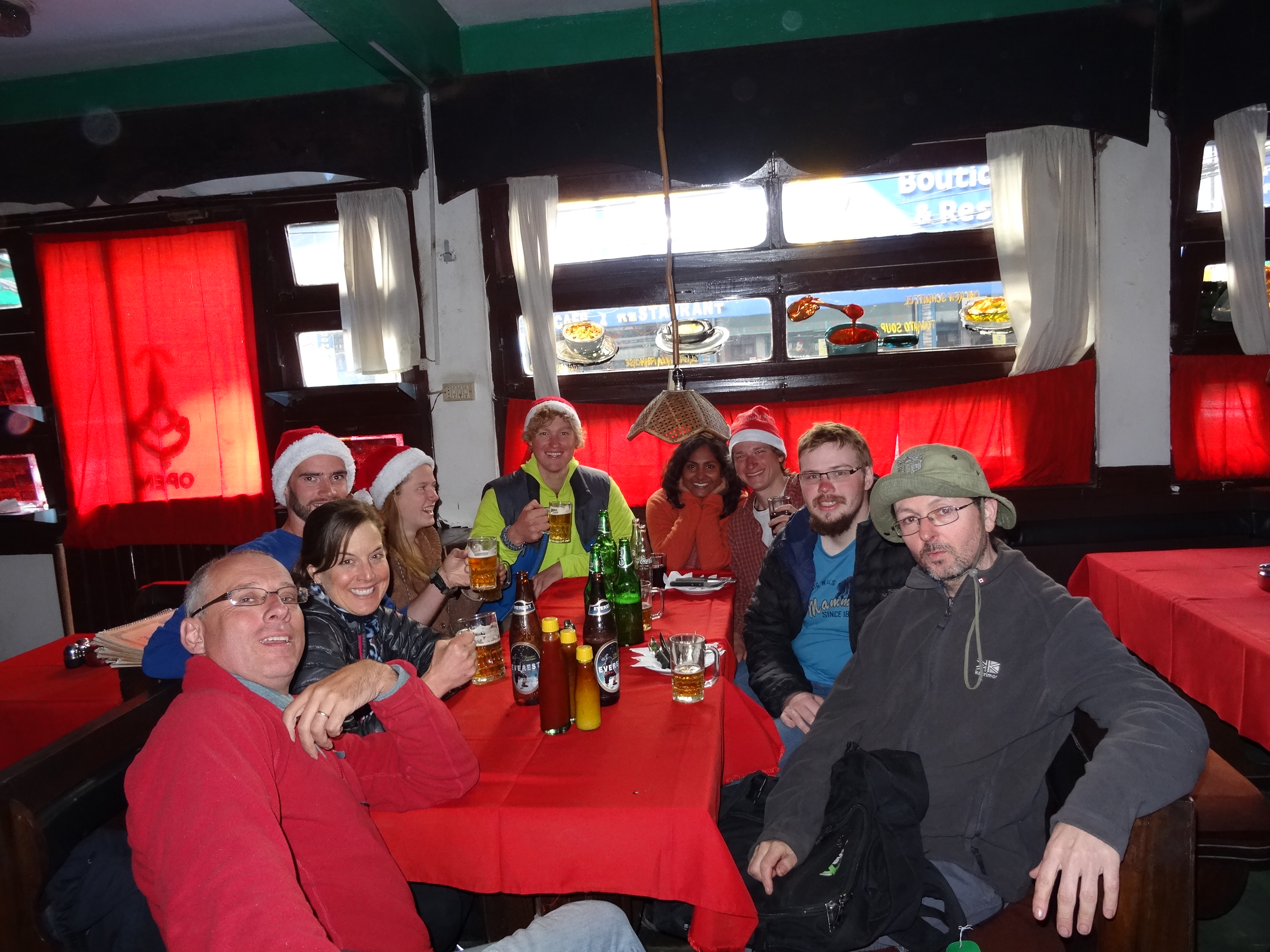
Christmas Eve dinner crew.
DSC05405
Christmas Day lunch crew.
DSC05090
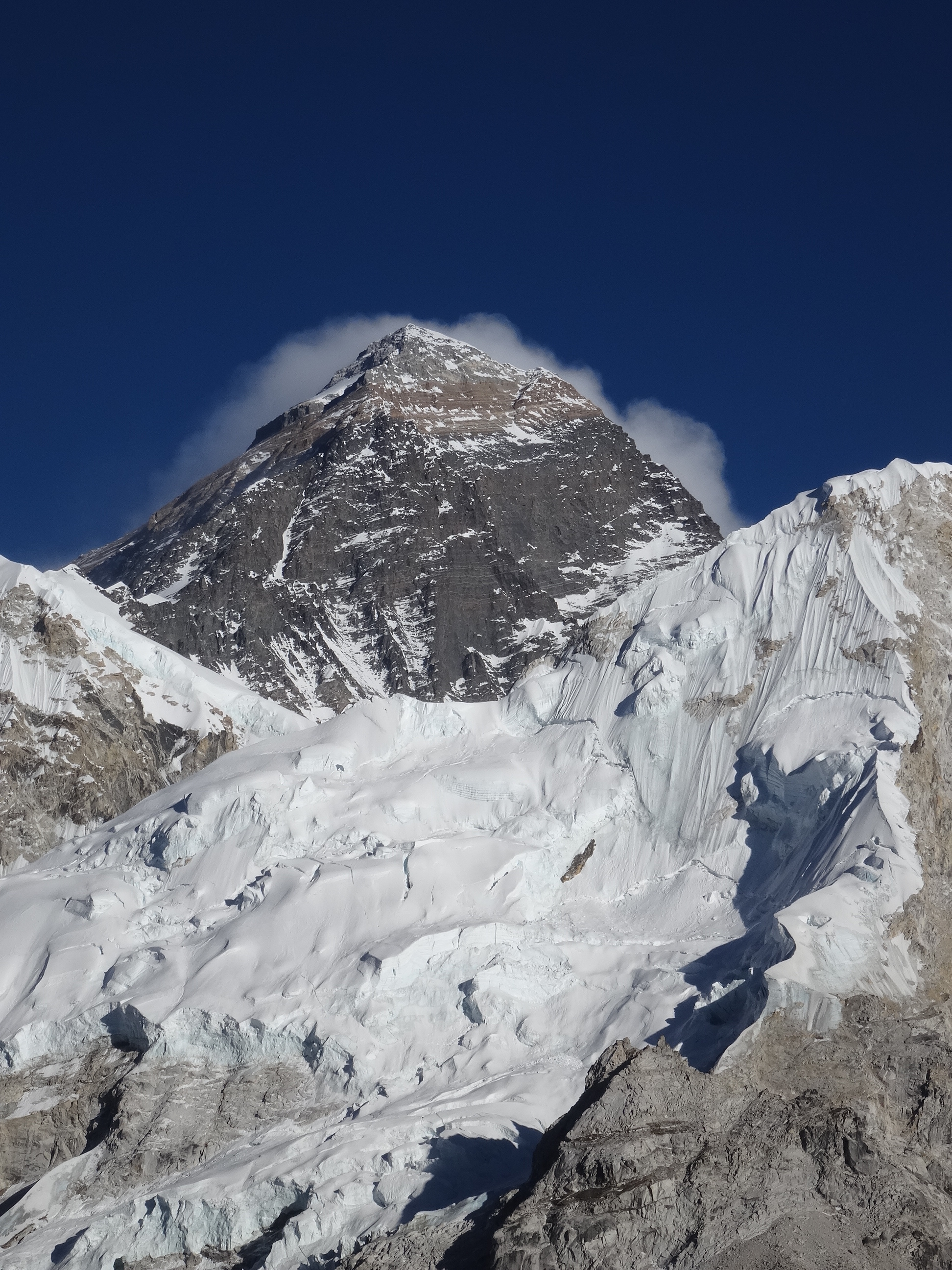
Everest.

Europe: England, Belgium, Netherlands, Germany, Czech Republic, and France (Oct 8 to Nov 10, 2015)

After 7 days trekking in the Scottish highlands (see previous post), I went on a brief tour of several  other countries of Europe, visiting England, Belgium, the Netherlands, Germany, the Czech Republic, and France, for a second time.

So how did I spend about 5 weeks in western Europe? Exploring the culture and history of some beautiful cities and surrounding natural areas and hanging out with friends, of course!

London, England (Oct 8-11)

After a 5-hour train from Glasgow (Scotland), I arrived in England’s capitol city of London (population over 8 million), to visit my friend Sally who moved from Austin, Texas, where I know her from, to London over 5 years ago. It was great catching up with her on my first night over a bottle of wine at her cozy flat in Highgate. For my first full day in London, I explored the city. It was fun to see the sites I’d only seen on TV and in movies, including Piccadily Square, Buckingham Palace, Westminster Abbey, Big Ben, and the Thames River walk. I also visited the British Royal Museum, renowned for its extensive art collection from all over the world and the Tate Modern Art Museum. Later, Sally and I walked around the Springfield area and she took me to Rules, London’s oldest restaurant, for a drink. They usually adhere to a strict dress code but thankfully our smiles persuaded the door man to let us in wearing jeans and sneakers. The next day, Sally took me out for more sightseeing, including the Victoria and Albert Museum and The London Tower. After, we explored the market areas:  Camden Lock, Borough Market, and Inverness Street Market. It was an explosion of people and color and cool unusual things, mixed with repeat versions of the same old touristy crap. It was people watching and window shopping at its best! We roamed around these market areas for several hours enjoying the scene, then stopped for an pint at a pub where the crowd was completely enthralled in the World Cup rugby match on TV. It seemed like the quintessential London experience.

Antwerp, Belgium (Oct 11-14)

After a great visit with Sally in London, I took a 3.5-hour bus to Antwerp (population 510,610). It was interesting to be on the bus as it was loaded onto the train that then traveled under the English Channel to be offloaded on the other side in France. I went to Antwerp to hang out with my brother, Jabal, one of my favorite people in the world! He was on holiday in Antwerp to return to Belgium DesertFest, one of his favorite psychedelic rock festivals. I met him for Day 3 of the 3-day rock festival. We had a great time drinking Belgium beer, listening to music, and being the silly siblings that we are. Over the next few days, we explored the beautiful city of Antwerp, including the Main Square area, several lovely cathedrals, and the Scheldt River walk. Per Wikipedia, the Port of Antwerp is one of the biggest in the world, ranking third in Europe and within the top 20 globally. The city has a historic vibe despite the fact that it was hit by more V-2s than all other targets during the entirety of WWII combined. While the attack did not succeed in destroying the port, the city itself was severely damaged and was subsequently rebuilt after the war in a modern style. We also walked to an old fort located in a beautiful forested city park a few hours outside Antwerp. After a short train ride to Brussels, we visited Atomium, a structure constructed for the 1958 World’s Fair. Its stainless steel spheres are connected so that the whole forms the shape of a cell of an iron crystal magnified 165 billion times. It was very cool, as was hanging out my awesome bro!

Paris, France (Oct 15-23)

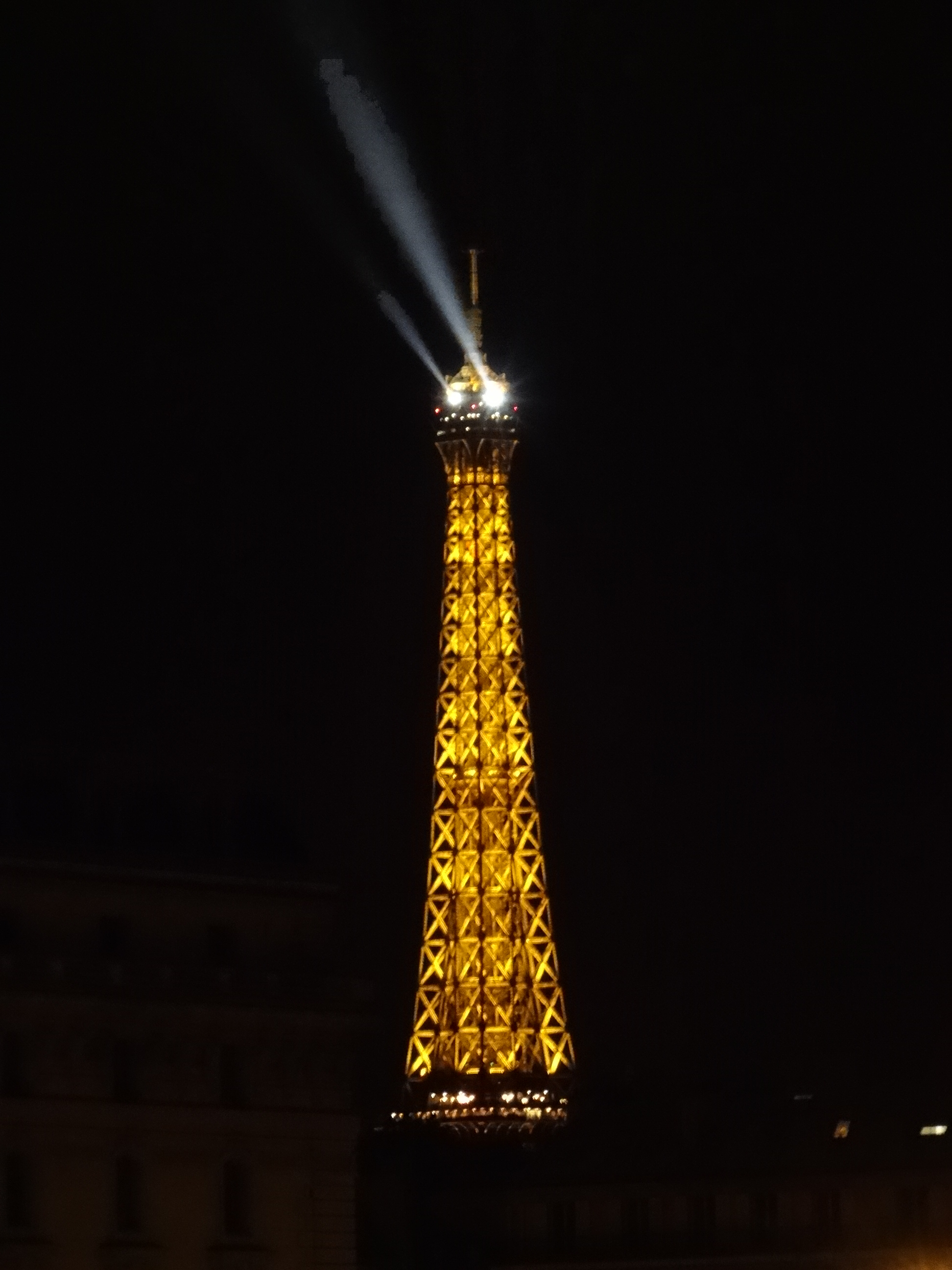
After a great visit with Jabal in Antwerp, I took a 5-hour bus to visit Paris for a second time (see previous post). This time, I visited my friend, Mathieu, a Parisian who I’d met in Argentina, then crossed paths with in Bolivia and again in Peru. I enjoyed relaxing at his flat and exploring parts of Paris I missed during my first visit, including the Eiffel Tower. Not only did I get to enjoy the amazing views of Paris from the tower, but Mathieu and I watched a movie from there. It so happened that NetFlix was having an event on the second floor to which we got last minute tickets. So we relaxed on bean bag chairs and watched the 2015 movie, Aloha, starring Bradley Cooper, on the second floor of the Eiffel Tower. So fun!

Amsterdam, Netherlands (Oct 23-26)

After a great visit with Mathieu in Paris, I took a 7-hour bus to the Netherlands’ capitol city of Amsterdam (population 831,279) to hang out my friends, David and Paul, who came all the way from California to hang out with me! And, they brought me a large bag of tortilla chips, two bottles of salsa, and tequila, three things I’d been missing from home. I’ll admit it, I ate almost the entire bag of chips the first night. We had fun exploring the Amsterdam night life, hitting some bars and dance clubs, and exploring the sights of the city including the infamous Red Light District, “coffee” shops, and the areas along the endless maze of lovely historic canals. It was so great hanging with my California boys!

Berlin, Germany (Oct 27-29)

After a great visit with David and Paul in Amsterdam, I took a 10-hour bus to Germany’s capital city of Berlin (population 3.5 million). This time, I was not in the city to meet friends, but to explore some history. To learn more about this historic city, I took a walking tour during which we visited sights including Brandanburg Gate, the Memorial to the Murdered Jews of Europe, the largest remaining section of the Berlin wall, Checkpoint Charlie, the Topography of Terror Historic Site, and the Spree River walk. During the tour, much of the WWII information I’d learned in high school history class came to life. On my second day, I visited the Sachsenhaus Concentration Camp and Historic Site. It was an emotional but very educational day. Interestingly, visiting a place where humans did horrible things to other humans helped me remember to always try to be compassionate, understanding, and loving towards others.

Prague, Czech Republic (Oct 29-Nov 3)

After visiting Berlin, I took a 5-hour bus to the Czech Republic’s capitol city of Prague (population about 1.2 million) to visit my Czech friends, Renata and Gabriela, who I’d met and trekked with in Peru (see previous post). It was great to have my local friends showing me around the beautiful city of Prague, taking me to sights including Old Town Square, Prague Castle, St Vitus Cathedral, Charles Bridge, and the Vltava River walk. Per Wikipedia, Prague suffered considerably less damage during WWII than some other major cities in the region, allowing most of its historic architecture to stay true to form. As a result, the extensive historic centre of Prague is a UNESCO World Heritage Site. Along with exploring the city, Renata and Gabriella took me on a road trip to the Cesky Kras Protected Landscape Area, about an hour from Prague, where we hiked through a gorgeous forest in fall colors to one of the Czech Republic’s many castles and the nearby quaint village. It was so cool to hang out with such cool girls.

Paris, France (Nov 3-10)

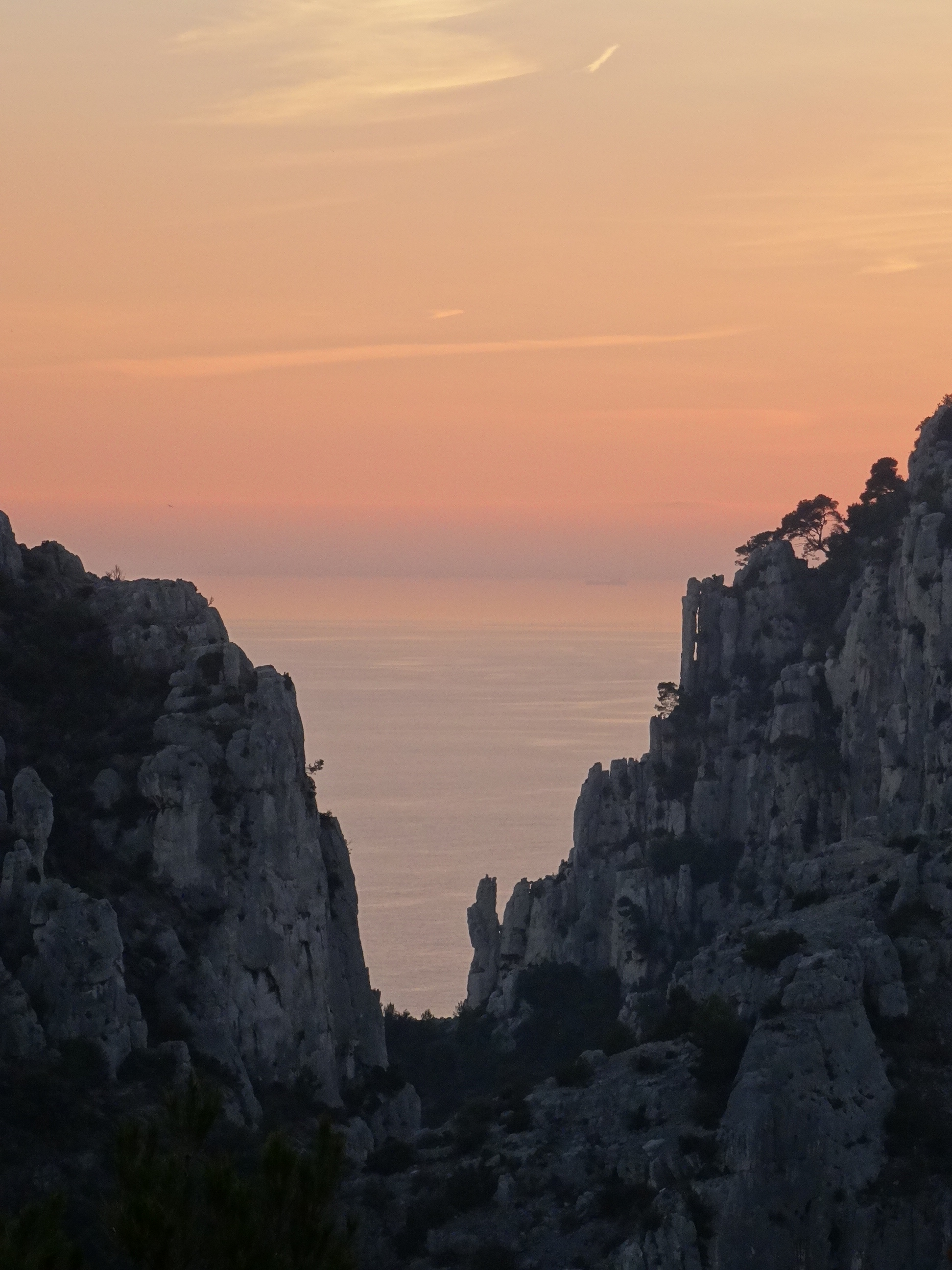
After a great visit with Renata and Gabriela in Prague, I returned to Paris. This time, along with hanging out in Paris again, Mathieu took me to Cassis, a small city (population 7,793) on the south coast of France, just east of Marseille. We traveled there via high-speed train. By car, this trip takes about 8 hours; by high speed train, it takes about 4.5 hours. Wow! Cassis is a small, quaint coastal town filled with many shops, cafes, a small marina, and lovely beaches. During our visit, we also explored the Espace Naturel des Calanques (Calanques Natural Landscape Area), trekking along the limestone cliffs overlooking the gorgeous clear blue waters of the Mediterranean, and the Plage d’En Vau beach, swimming in the gorgeous clear but cold blue waters of the Mediterranean. Per Wikitravel,  “Qu’a vist Paris, se noun a vist Cassis, pou dire: n’ai rèn vist” (He who has seen Paris but not Cassis can say, I haven’t seen anything.” These words, spoken by Nobel-prize winning writer Federique Mistral, reflect the great attraction that Cassis exerts on all those who go there. I concur. It was great to hang out with Mathieu again and explore such a magical place.

While somewhat brief, my visit to these lovely, historic European cities and beautiful natural areas was wonderful, and my experience was made even more memorable by the people with whom I shared it with. Thank you Sally, Jabal, David, Paul, Renata, Gabriela and Mathieu for a great visit!!

Here are a few pictures. Click the links to see the full photo albums:

London, Antwerp, Paris: https://goo.gl/photos/RnWGC8T5oV46oJm3A

Amsterdam:  https://goo.gl/photos/vpc9h2GEvZiFBWau7

Berlin, Prague, Cassis:  https://goo.gl/photos/n9RxrgfxCdBx82mA7

Enjoy!

DSC03069
London with Sally.
DSC03178
Antwerp with Jabal.
DSC03225
Paris with Mathieu.
IMG_2844
Amsterdam with David and Paul.
DSC03426
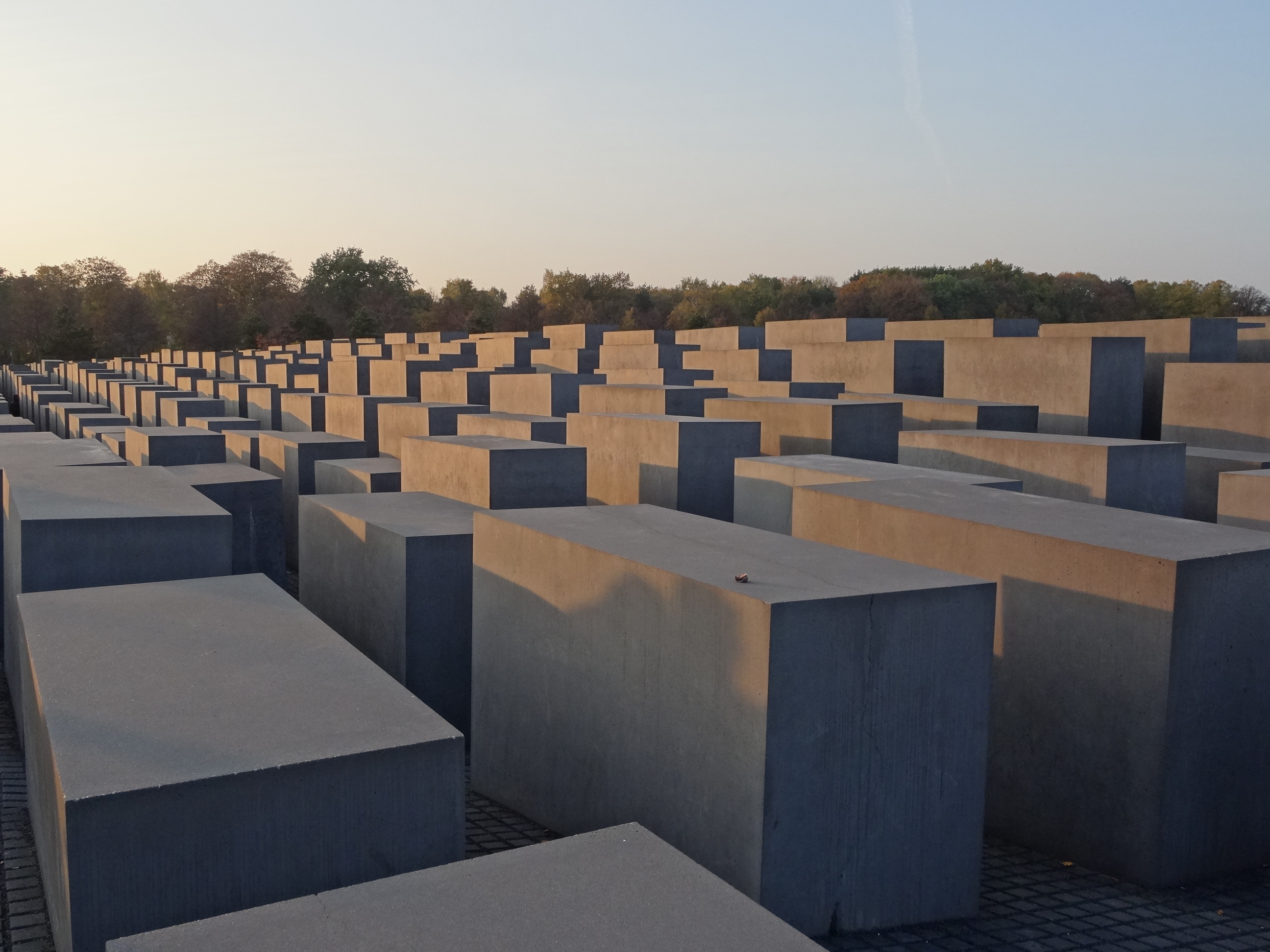
Berlin – Memorial to the Murdered Jews of Europe.
DSC03478
Prague with Gabriela and Renata.
DSC03657
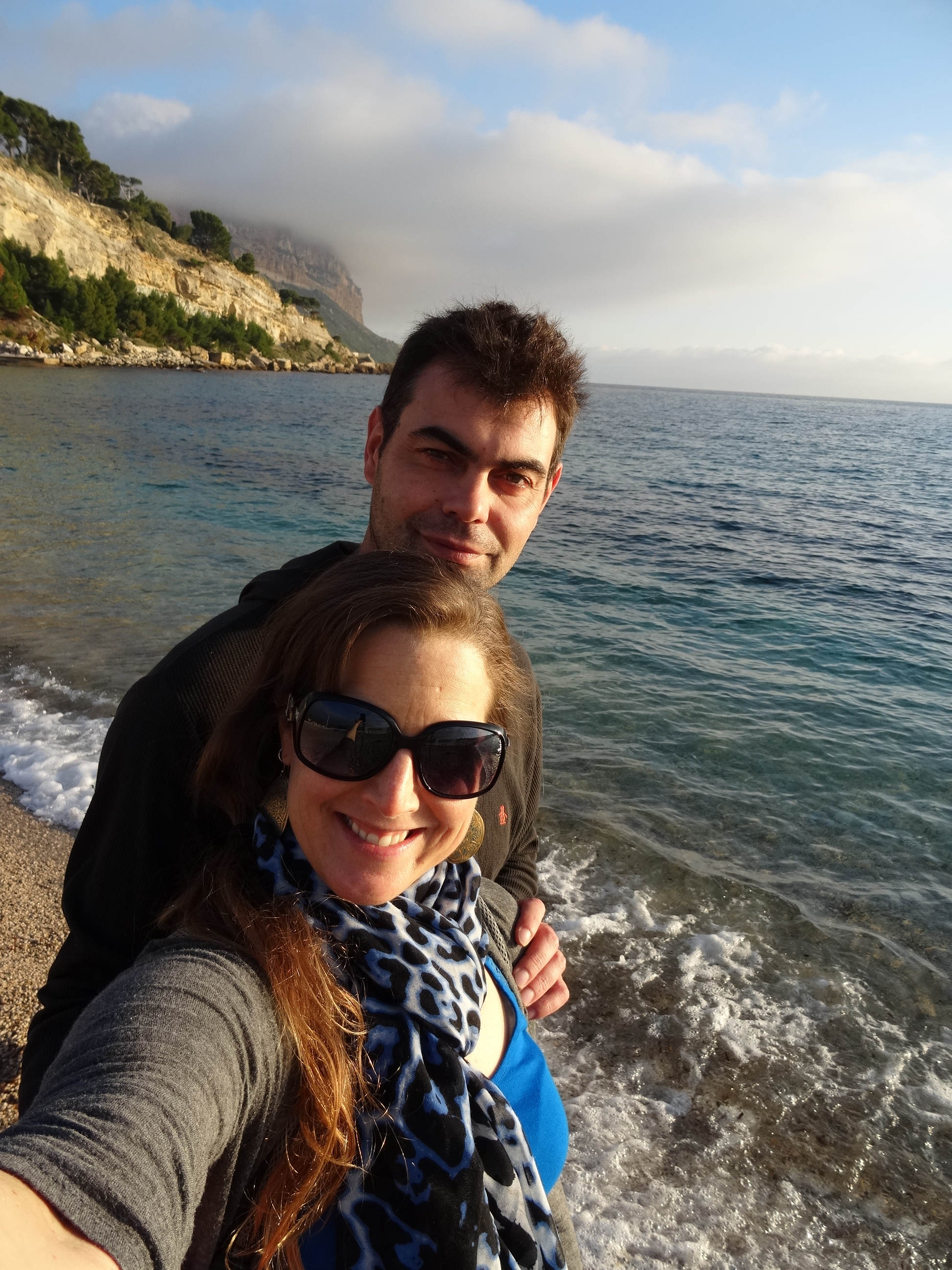
Cassis with Mathieu.
DSC03716
Cassis sunset.

Scotland: Walking the West Highland Way (Sept 30 to Oct 6, 2015)

After two months in Ireland (see previous post), I returned to Scotland to walk the West Highland Way. This 96-mi (154-km) long footpath through the Scottish highlands is listed among the top 20 epic trails in the world by National Geographic magazine[1].

So how did I spend 7 days in the Scottish highlands? Trekking of course!

Upon arriving in Glasgow, I reconnected with Dave (England) who I’d met in Chile (Parque Nacional Torres del Paine) and traveled with for almost three weeks in Argentina (El Bolson, El Chalten, and Bariloche). From Glasgow, we took a short train ride to the small town of Milngavie where the trail begins. After getting a map and taking a few pictures, we started the walk.

The West Highland Way links hike/bike trails between the small towns and villages it passes through. Per Wikipedia, parts of the trail follow ancient roads such as drover’s roads (to herd livestock), military roads, and coaching roads. Upon its opening in 1980, the West Highland Way became the first officially designated long distance footpath in Scotland, and in 2010, it was co-designated as part of the International Appalachian Trail.

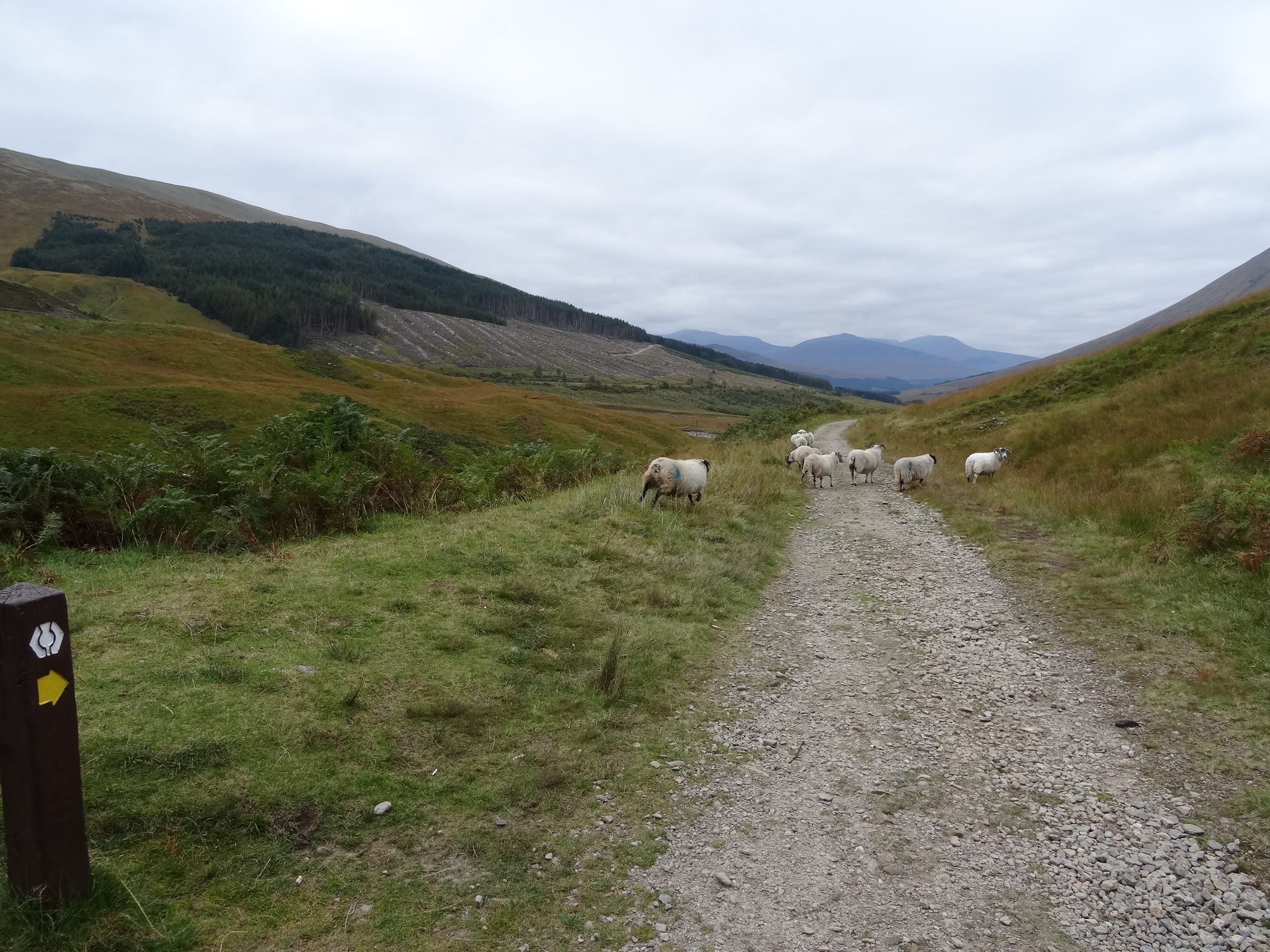
While on the trail, Dave and I trekked through varying landscapes including rolling pasture lands dotted with black-faced sheep, native grass and shrub lands, and valleys bordered by rugged mountains, crossed numerous rivers and small streams, and walked for a day and a half along the shores of 23-mi long Loch Lomond. We also walked through patches of woodland and forest, some natural and some artificially created. Per the West Highland Way website, most of Scotland’s pine forests are made up of nonnative species such as sitka spruce, larch, and douglas fir. However, ancient Caledonian pinewood forests (consisting of Scots pine, juniper, birch, willow, rowan, and aspen trees) once spread across thousands of kilometers of the highlands. These native forests now remain at just 84 protected sites covering 180 km2 in the north and west where restoration is ongoing. Walking through the patches of forest was beautiful, contrasting sharply with the vast areas of pasture and grasslands, but walking through the patches of ancient pinewood forest was magical.

Along the way, we passed through several small towns and villages, the “villages” typically consisting of a hotel or lodge with a pub welcoming walkers to rest, use the facilities, and have a pint. Similar to my previous experiences in Scotland, the locals were very friendly, being used to hordes of walkers on the West Highland Way. Fortunately for us, we walked during the low season and therefore often had long stretches of the trail to ourselves, meeting only a handful of other walkers during the day. On our first day, we met Richard, a Scotsman, who we ended up walking and camping with intermittently throughout the rest of the trek. We was a wealth of information about Scotland, the highlands, and the walk. And, he walked in a kilt, adding to my Scottish walking experience (ha!). While many walkers opt to stay at the hotels along the trail, Dave and I tent camped each night, mostly at developed campgrounds. Besides having access to facilities (i.e., toilets and showers), camping at developed campgrounds also allowed us to enjoy a pint with our fellow walkers at the end of the day. A perfect way to end a long day of walking!

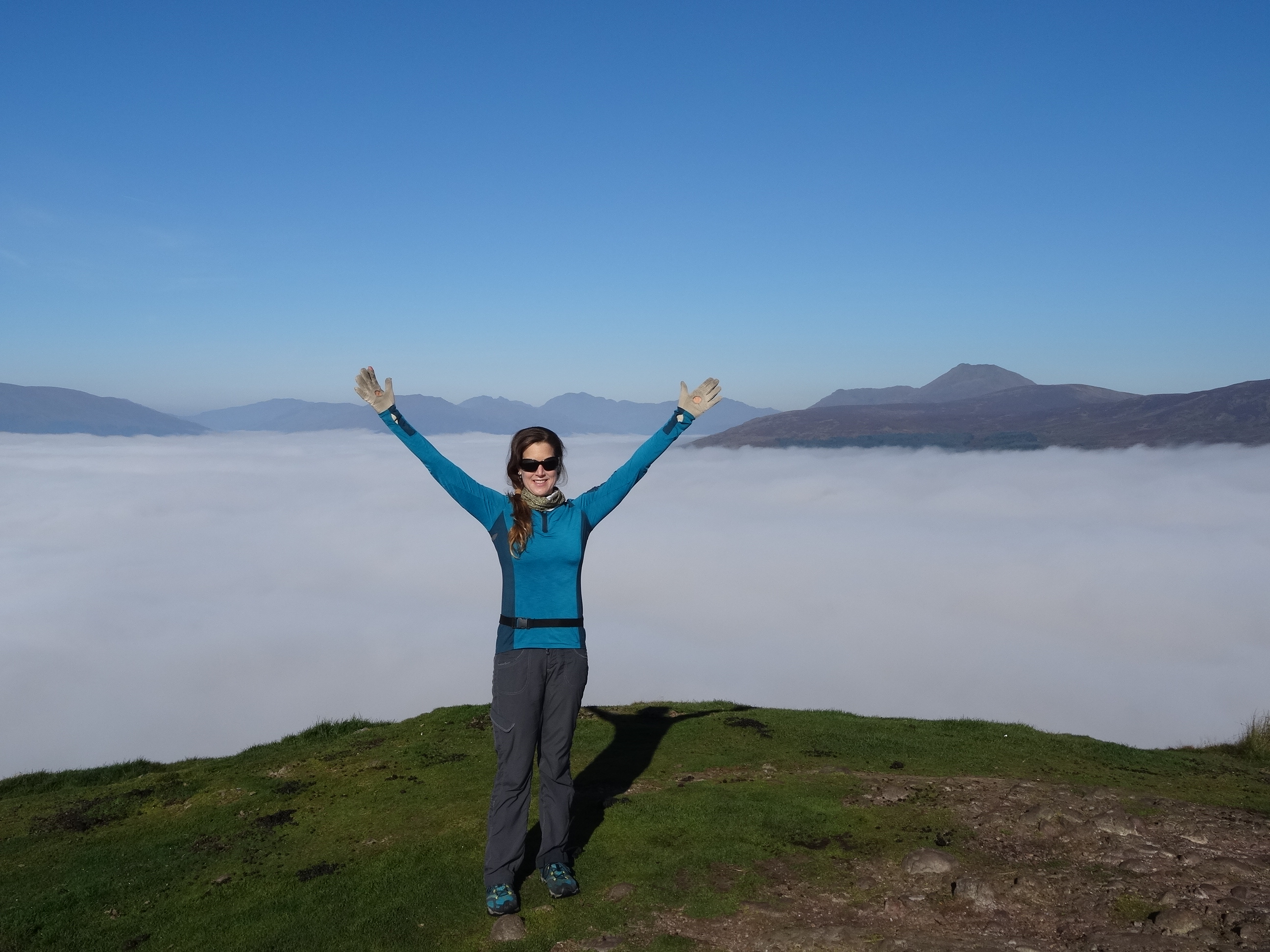
On our last day, Dave and I did a 10-mi (16-km) roundtrip side hike to the summit of Ben Nevis, the highest peak in the United Kingdom at 4,409 ft (1,343 m) then walked the last few miles of the end of the trail in Fort Williams. The summit was cold, windy, raining, and thick with clouds, preventing any type of view, but it was a great end to our 7-day adventure.

Walking the West Highland Way was a great way to explore the beautiful Scottish highlands, and my experience was made even more memorable by the people with whom I walked. Oh, and by the amazingly good weather we enjoyed for most of the trek (which we were told repeatedly is quite unusual). Thanks Dave for trekking with me again!

Here are a few pictures. Click the link to see the full photo album:  https://goo.gl/photos/WVWTA4mPFrn3h1aB7

Enjoy!

DSC02709

DSC02717

DSC02763

DSC02791

DSC02875

DSC02926

Ireland: Browns Mills, Kinsale, and Beyond (July 29 to Sept 29, 2015)

After 3 weeks in Dublin, Ireland, Elie, Scotland, and Paris, France with my Texas and Illinois peeps (see previous post), I flew back to Ireland for a planned 2-month stay with my Irish friend Martin. Martin and I have been friends since meeting 5+ years ago while camping in Death Valley National Park, California. After many years in San Francisco, he recently moved back home to Browns Mills, Ireland.

Browns Mills is a small farming community just outside of the well known town of Kinsale in County Cork [about 180 miles (286 km) southwest of Dublin]. Farmers in the area, and throughout Ireland, primarily grow barley, the majority of which is grown for livestock feed and bedding, with a small percentage of it grown for whiskey production, if the quality meets the makers’ high standards. Kinsale is a historic port and fishing town (population 2,257) located on the coast at the mouth of the River Bandon. The streets of this charming town are lined with colorful shops and delicious local cafes and restaurants. While it’s a highly visited town, it didn’t feel touristy, I think because there are no American chain stores (yeah!). It’s also known as the gastronomic capital of the Republic of Ireland.

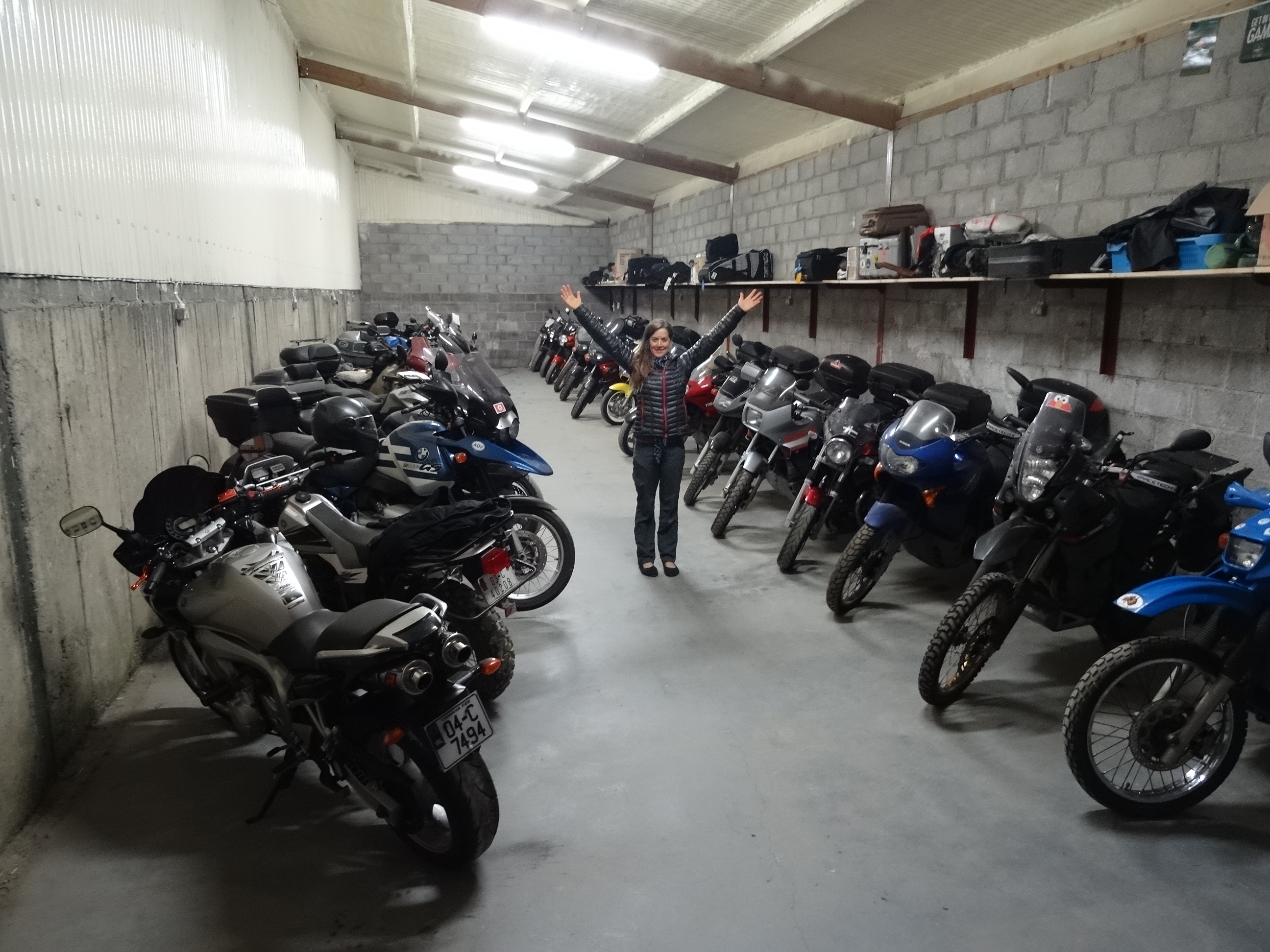
Beside growing barley on his own 10-acre plot, Martin works as a contract farmer, meaning he’s hired to harvest, mow, and bale other farmers’ fields using his big toys (aka combine harvester, tractors, bale handler, etc). He is also the proprietor of Motofeirme, a service helping non-Europeans find, purchase, insure and store their own motorbikes for travel around Europe and beyond (www.motofeirme.com or https://m.facebook.com/motofeirme). Given his busy life, especially during the summer harvest, I came to Browns Mills to visit and to help him with Motofeirme.

So, what did I do for 2 months in Browns Mills, Ireland? Explore southern Ireland and learn a lot about farming and motorcycles, of course!

Upon arriving in Kinsale from the Cork Airport, I was treated to a very friendly welcome by Martin’s mom, Eileen, who is an adorable, exuberant person with a lovely warm smile and laugh. Martin sent her to pick me up from the bus stop since he was busy harvesting. In fact, I didn’t see him until my second day there and even then, only for a few hours over the next few days. Thankfully, Phil (England), my predecessor, was there to greet me and show me around. I settled into my private room in the 4-bed bunkhouse at Martin’s place then took a few days to transition from having just been in bustling Paris to being surrounded by farmlands for as far as the eye could see, hearing cows mooing in neighboring fields, and seeing tractors and giant harvesters, including Martin’s, drive down the narrow farm roads. It was nice to slow down and smell the barley.

Phil, who’d been helping Martin with Motofeirme since April, showed me the ropes during his last week there before heading home to the Neitherlands. Basically I would be the Motofeirme greeter, meeting and assisting bikers arriving to Martin’s place to pick-up or drop-off their motorbikes before/after their European travels, tend to the bunkhouse, and perform other odd jobs as needed. It was great meeting the bikers, mostly from Australia, Canada, and the US. It was especially amusing greeting those who were seeing their motorbikes in person for the first time, having purchased their bike through Martin, who they hadn’t previously met, via photos, phone calls, and emails. The sigh of relief that the motorbike they pre-paid for prior to boarding the plane to Ireland was there and in the promised condition was definitely perceptible. Some of the bikers I met stayed in Kinsale, but most stayed in the bunkhouse, some for a few nights and some for a week or more while they readied their motorbikes and gear for the upcoming road trip or unwound before returning home after many weeks or months of being on the road. Hearing about their travel plans and stories from the road was definitely a huge perk of the job.

When there were no bikers picking up or dropping off their motorbikes, I helped plant, harvest, and bag veggies for Horizon Farms, a local farm run by Martin’s friends, Colum and Liz, that supplies many of the area restaurants and markets. I really enjoyed learning about growing and harvesting veggies including leeks, onions, cauliflower, lettuces, spinach, and various types of kale and broccoli. I have a new appreciation for the amount of hard work it takes to bring gorgeous veggies from the farm to the table. And I was able to bring home bags of the veggies I helped harvest (all by hand) – a huge perk for a veggie lover like me! Working and chatting with the Horizon crew (Colum, Liz,  Nollaig, Philip, and Matt) made me feel like a local and definitely added to my Irish experience.

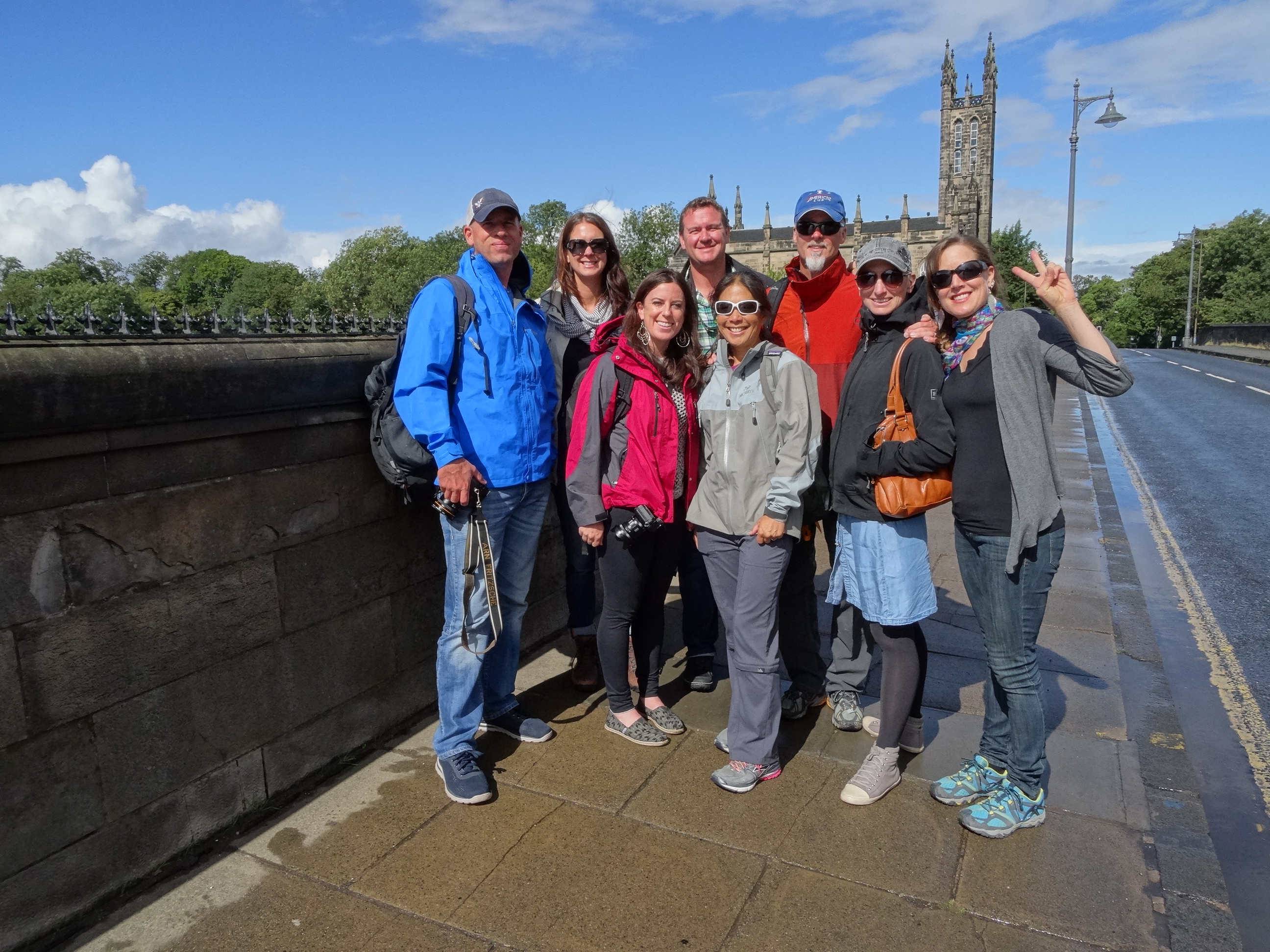
In between exploring Kinsale and Cork, hanging out with Martin, working for Motofeirme and Horizon Farms, I also got to hang with some of my friends from San Diego, California, whom I hadn’t seen in over 6 months! I spent 4 days with Anaika, Ron, and their girls, Zeia and Auni, during their stay on an organic cattle farm near Bray in County Wicklow (about 12 miles south of Dublin). Then I hung out with Jody, Randy, Kristin, Thad, Karin, Ryan, and Helen for 4 days during their trip to Edinburgh, Scotland. Then, Paul Kim came to visit me for 10 days during which we went on a 6-day road trip to explore southwestern Ireland, including the Cliffs of Moher, Dingle Peninsula, Iveragh Peninsula (aka Ring of Kerry), Gap of Dunloe, and Kilarney National Park. We had a great time exploring the spectacular scenery in our tiny rental car with a left-handed stick shift driving on the left side of many very narrow roads. Our road trip mantra:  to the left, to the left.

Living in and exploring Ireland for 2 months was a fantastic experience. It was great to learn more about Ireland’s rich history though visiting early monastic sites, forts, cemeteries, churches, castles, tombs, etc., talking with locals, and exploring the amazing scenery which included rolling pastureland and native shrub/grassland, oak/pine forests, limestone outcrops, and coastal mountains and cliffs. The experience was made much more special by the people I shared it with including my local friends, Martin and the Horizon crew, my Motofeirme friends, and my friends visiting from California. Thank you all for being part of a memorable visit.

Here are a few pictures. Click the link to see the full photo album:  https://goo.gl/photos/TCkrkb9XqsYoqQ47A 

Enjoy!

DSC02592
In the Motofeirme bike barn.
DSC01914
Getting a ride on the harvester.
IMG_20150809_234940
At the pub with Martin.
DSC01605
Planting veggies with Philip, Matt, and Colum (driving).
IMG_20150810_004333
Having a cone wih Anaika, Auni, and Zeia at Powerscourt Gardens.
DSC02002
With Ryan, Kristin, Helen, Thad, Jody, Randy, and Karin in Edinburgh, Scotland.
DSC02409
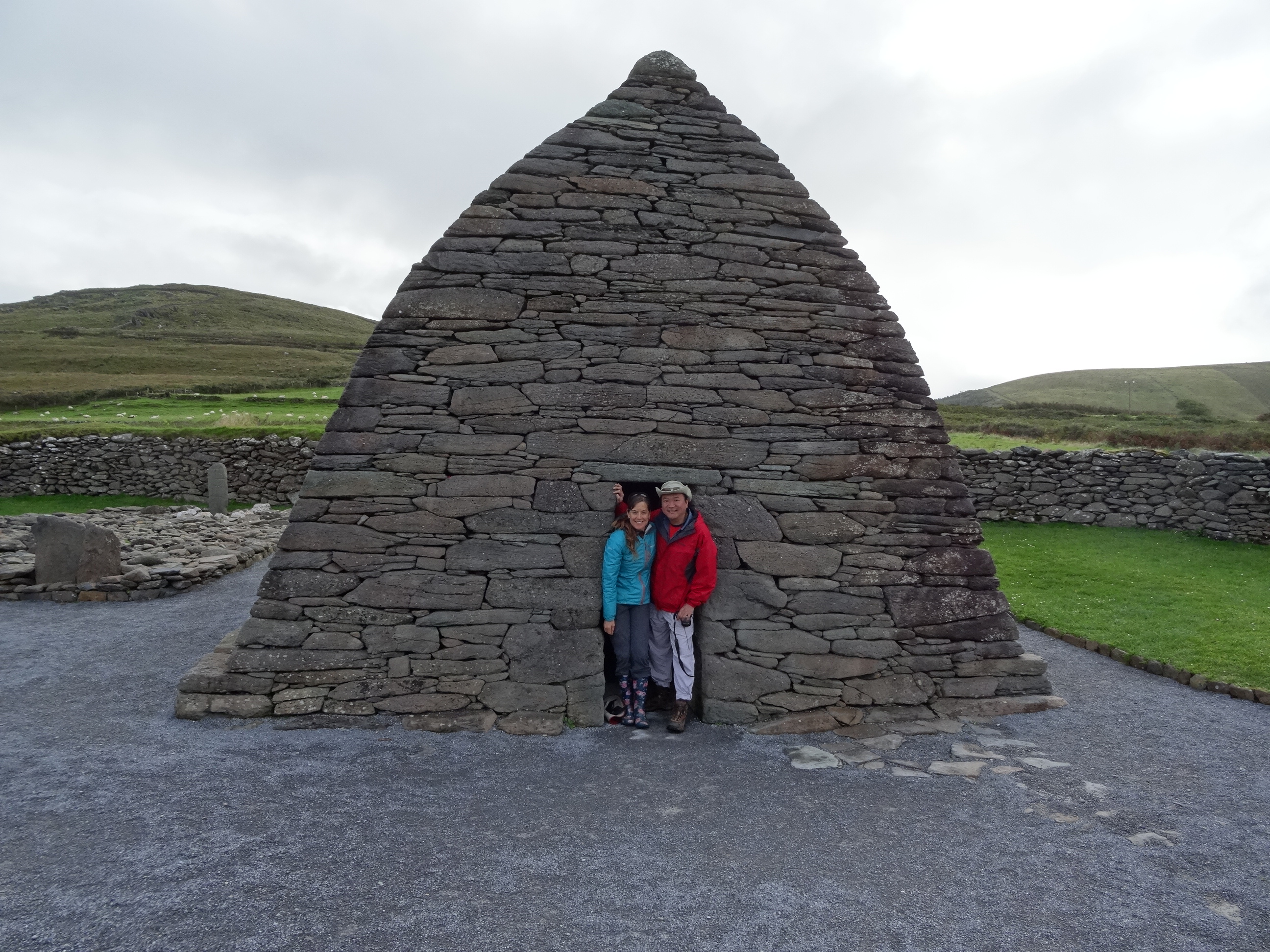
Exploring a 7th/8th century oratory with Paul.
DSC01949
Lovely day at the harbor.

UK/Europe: Ireland, Scotland, and France (July 7 to 29, 2015)

After exploring and trekking in South America for about 5 months (see previous posts for Chile, Argentina, Bolivia, Peru, and Ecuador), it was time to move on. I had an unforgettable experience in South America and definitely plan to return to explore the beautiful landscapes and cultures of the countries I didn’t get to visit, and revisit some of my favorite areas and new friends.

From Latacunga, Ecuador, I took a day bus to Guayaquil (Ecuador) where I caught a 14-hour flight to Dublin, Ireland, to join Steve and his mom, Glenda (Texas) and his brother, Jim, and friend, Sam (Illinois) on their 3-week vacation in Ireland, Scotland, and France. Steve, Glenda, and Jim had been planning this vacation for several years so I felt very lucky to be able to join them.

So, what did we do for 6 days in Dublin, Ireland? Explore the city and it’s pubs of course!

Dublin, the capitol of the Republic of Ireland, is a large bustling city (population 527,612) which, due to its accessibility, has a small city appeal. We stayed in a great apartment close to all the action. We spent most of our time exploring the city but also visited the small coastal village of Howth, about a 30 minute train ride northeast of Dublin. We had a great time walking around and checking out the sights, which of course, included the pubs where we chatted with the locals. Per Lonely Planet, “Dubliners at their ease are the greatest hosts of all, a charismatic bunch whose soul and sociability are so compelling and infectious that you mightn’t ever want to leave.” It’s so true! We were amazed time and time again by the genuine friendliness of the people we met on the street, on the train or bus, at restaurants, and at the pub.

From Dublin, we flew to Edinburgh, Scotland and stayed in Elie, about an hour north of Edinburgh and more importantly to Steve, Jim, and Sam, about 30 minutes from the town of St Andrews, the “home of golf” and the location of the 2015 Open Championship.

What did we do for 7 days in Elie, Scotland? Explore the beautiful Scottish coastline and immerse ourselves in golf of course!

We stayed in a beautiful house with a front patio overlooking the beach. Elie is a quaint, charming coastal village (population 940) whose resident population swells in the summer with tourists enjoying the beaches, watersports, and golf courses. We explored the idyllic coastal towns between Elie and St Andrews. While much larger than Elie, St. Andrews (population 16,680) is also charming. Per Wikipedia, “St Andrews is known worldwide as the “home of golf” in part because the Royal and Ancient Golf Club, founded in 1754, exercises legislative authority over the game worldwide (except in the United States and Mexico), and also because the famous links course is the most frequent venue for The Open Championship, the oldest of golf’s four major championships.” The day before the start of The Open, we toured the famous golf course and got to see several famous players (i.e.,Tom Watson and John Daly) on their practice rounds. I don’t watch or play golf, but even I couldn’t resist getting caught up in the excitement of walking on such a historic course and seeing some famous players. Steve, Jim, and Sam were like kids in a candy store walking on the course and even more so as they watched their favorite players battle it out on Day 1 of The Open from the sidelines of the historic course. While I didn’t go with them to The Open, I kept up on the golfer’s scores while relaxing at the house. That’s how infectious the vibe of The Open was!

Besides being the home of golf, St Andrews is home to the beautiful University of St Andrews, the third oldest university in the English-speaking world and the oldest in Scotland, founded in 1413. Notable alumni include England’s Prince William and Princess Kate. We also explored Edinburgh, Scotland’s capitol, for a day, walking around the large (population 492,680) but very accessible city and visiting the Edinburgh Castle (12th century). It’s a beautiful historic city which explains why Edinburgh’s Old Town and New Town together are listed as a UNESCO World Heritage Site. And while in Scotland, we had to try the national dish, haggis, “a savoury pudding containing sheep’s heart, liver and lungs minced with onion, oatmeal, suet, spices, and salt, mixed with stock, traditionally encased in the animal’s stomach though now often in an artificial casing instead.” It was….interesting. We had a great time walking around and checking out the sights of coastal Scotland, which of course, included the pubs where we chatted with the locals. Like the Irish, the Scots we met on the street, on the bus, at restaurants, and at the pub were genuinely friendly and fun to chat with.

From Scotland, Jim and Sam returned home, Glenda went to London, England for a few days before returning home, and Steve and I went to Paris, France.

What did we do for 9 days in Paris, France? Explore the well-known sights of the city and indulge in fabulous wine and food of course!

Paris is the amazing, vivacious city I always imagined it would be. This capitol city is large (population 2,241,346) and bustling but accessible and filled with history, and of course romance. We stayed in a lovely apartment close to Canal Saint Martin and Republique Square, an area with numerous cafes, patisseries, small markets, and shops. We spent the days visiting some of Paris’ famous sights including the Notre Dame Cathedral (12th century), the Saint-Chapelle (13th century), Louvre Museum (1792), Père Lachaise Cemetery (1804), Arc de Triomphe (1836), and Basilica of Sacre-Coeur (1914). It was very cool to finally visit these places I’ve only seen pictures of. We also had the good fortune of hanging out with Steve’s friend, Eddie, and some of Eddie’s friends, all French. It was cool to hang out at their favorite spots and feel like a local. Along with hanging with the locals, we also adopted the local  lifestyle and picnicked along the Canal Saint Martin and the Seine. It was surreal to drink wine on the banks of the Seine while watching the daylight fading behind the Eiffel Tower. In addition to the good wine, cheese, bread, and fresh veggies that made up our picnics, we also enjoyed delicious wine and food at some fantastic restaurants, and, oh yeah, more than a few macaroons from the local patisseries. Holy crap, it’s no wonder Paris is a gastronomic capitol!

Exploring Dublin, Ireland, Elie and St. Andrews, Scotland, and Paris, France was a fantastic experience made much more special since I got to share the experience with Steve, Glenda, Jim, and Sam. Thank you all for letting me share your vacation and thank you Steve for a wonderful time in Paris.

Here are a few pictures. Click the link to see the full photo album:  https://goo.gl/photos/tTMnexAWsMG5UcUT9

Enjoy!

DSC00022
In Dublin, Ireland enjoying a beer with Glenda, Steve, Sam, and Jim before a tour of the Jameson whiskey distillery.
DSC00258
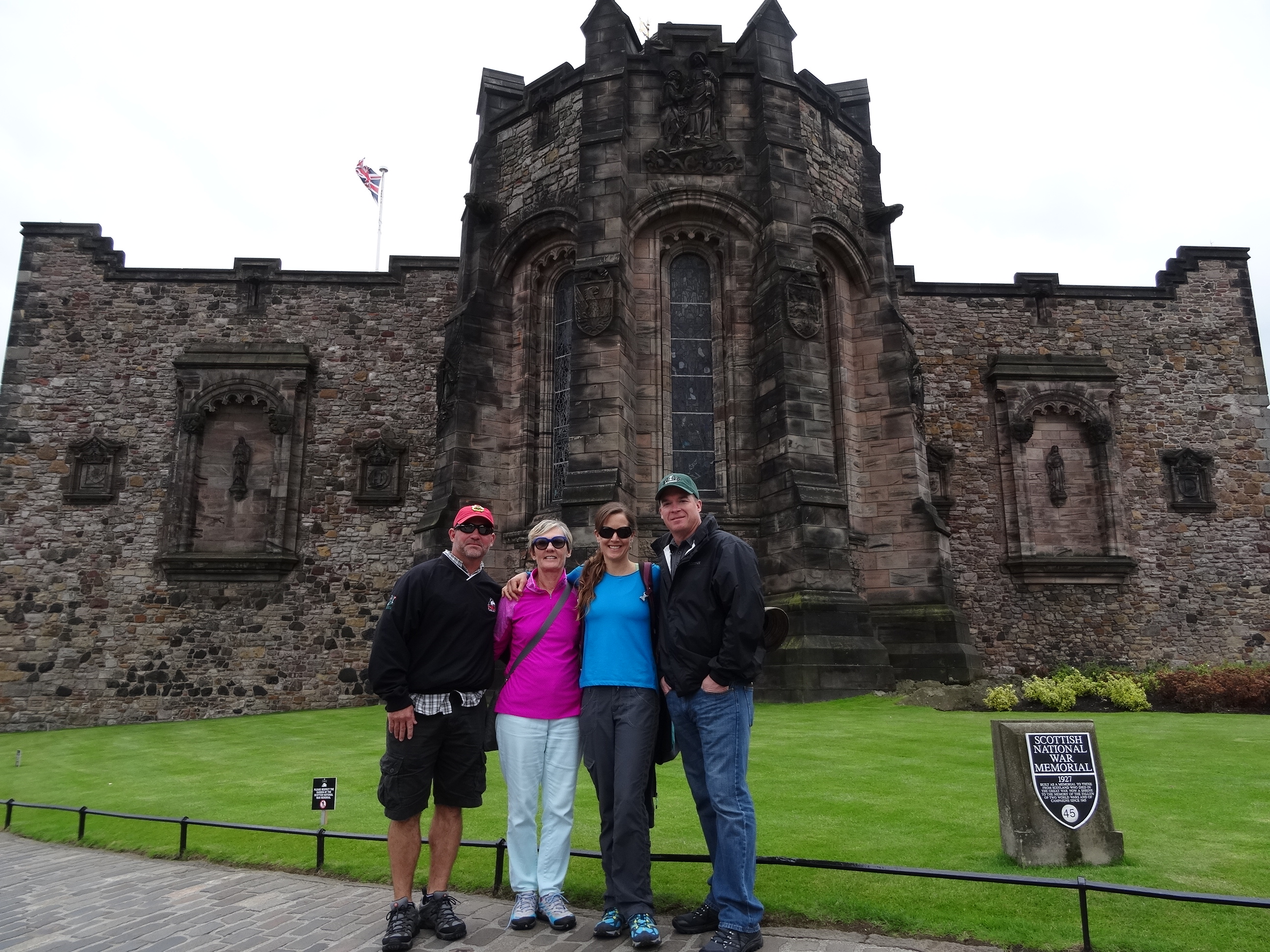
In Scotland touring the Edinburgh Castle with Jim, Glenda, and Sam.
DSC00147
In St. Andrews, Scotland walking the historic golf course before The Open.

DSC01425

DSC00460
In Paris enjoying wine with Steve on the banks of the Seine.
_20150808_082514
In Paris at the Louvre museum.