Bolivia: Cochabamba (April 15 to May 24, 2015)

After a 2+ hr flight from Buenos Aires (see previous post) to Salta, Argentina, an overnight bus from Salta to the Bolivian border town of Villazon, an 8-hr bus from Villazon to Potosi, Bolivia, and another overnight bus from Potosi, I finally made it to Cochabamba, Bolivia, a city known for good weather and great food.

What did I do for just over 5 weeks in Cochabamba, the gastronomic capital of Bolivia? I made some wonderful new friends, improved my Spanish, explored the city some, trekked a little, and ate lots of delicious Bolivian food.

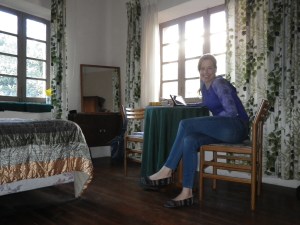
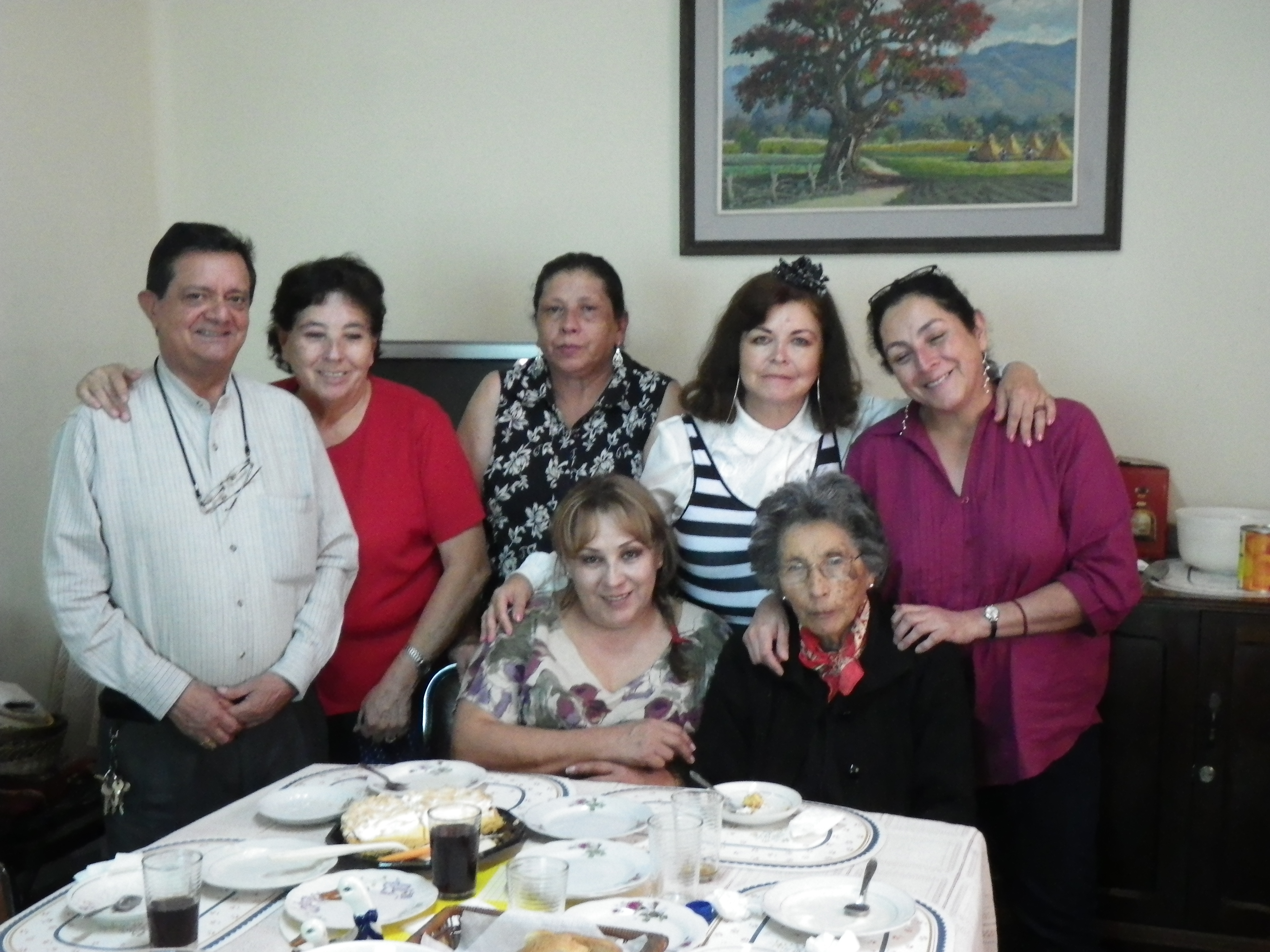
I arrived in town in time to hang out with Milena and Eric (friends from San Diego) for a few days. They were in town to visit Milena’s family whom I also met. After they left, Milena’s parents, Kato and Steve, graciously hosted me for about a week afterwhich I started a 5-week homestay set up by Milena’s sister, Daniela. My homestay hostess, Magda, a Cochabamba native, provided me with a lovely room overlooking the garden and three meals a day, including delicious lunches (the primary meal of the day). Along with providing room and board, Magda helped me improve my Spanish, as it was our only common language, and in the process, we became good friends. She also introduced me to her wonderful family:  her mom Celia, her four sisters, Celia, Kathia, Magaly, and Elia, and their families. I got to know this wonderful family during the weekly lunch held at Senora Celia’s house each Thursday. Everyone was very welcoming and friendly and made me feel like part of their family.

In addition to practicing Spanish with Magda and her family, I also took private Spanish classes with Ester, also a friend of Daniela’s. Ester is an excellent teacher. As part of my language lessons, she also taught me about Bolivia’s various indigenous communities and about some of the events that shaped Bolivia (i.e., the War of the Pacific in the late 1800’s during which Bolivia lost its coastal territory to Peru) and Cochabamba (i.e., the water war of 2000 protesting the attempt to privatize municipal water). And as if to provide additional subject matter for my education about Cochabamba, she also explained the history resulting in the student protests that occurred while I was there, one of which we watched from her apartment during class. While commonplace for the residents, this was the second protest I’d witnessed since arriving in town (the first being on the day I arrived) and I was a bit unnerved by the constant sounds of fire works and shouts from the marching protesters, the police presence, and the use of tear gas to disperse the march. Of course, protest as a means to call attention to an issue occurs worldwide but this was my first experience witnessing a protest in a foreign country. All of this made Spanish lessons with Ester even more interesting and educational, and overtime, my ability to speak and understand the language improved. And as an added bonus, Ester and I had fun during class and became friends.

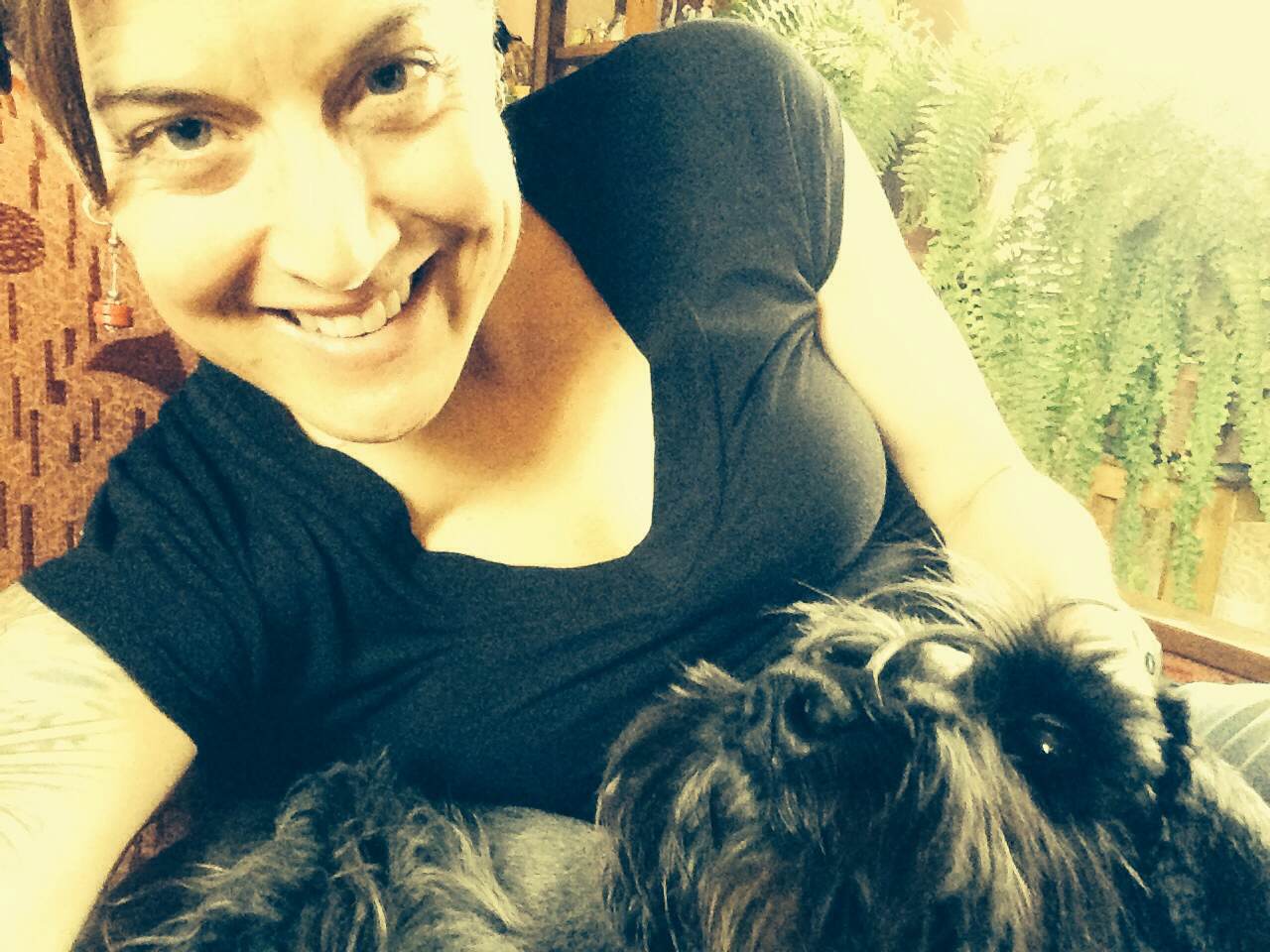
So what did my typical day in Cochabamba consist of? Waking up early, writing in my personal journal (English) and my Spanish journal, finishing my Spanish homework from the day before (if needed), having breakfast with Magda, going to Ester’s house for a 2-hr Spanish class, returning home for lunch with Magda (and on Thursdays, with her family), taking a siesta, working out in the garden, working on my Spanish homework for the day, chatting with Magda, playing with Frederico (her cute dog), chatting and texting with friends and family back home, then chilling for the night. On several occasions, Magda and I did morning yoga together in the living room (following a Spanish video on YouTube). Magda also introduced me to “Las mil y una Noches”, her favorite evening novela (soap opera). So, many nights, we were two ladies absorbed in the latest drama unfolding on the small screen. Classic! I couldn’t understand all that was said during the novela, but with the dramatic music, the hand gestures and facial expressions, and Magda’s explanation, I got the jist. I was amazed at how tired I was at the end of the day, especially for the first two weeks or so. Total immersion into the Spanish-speaking world takes a lot of brain power and energy. Thankfully, afternoon siestas are a normal part of the culture, because I took a lot of them!

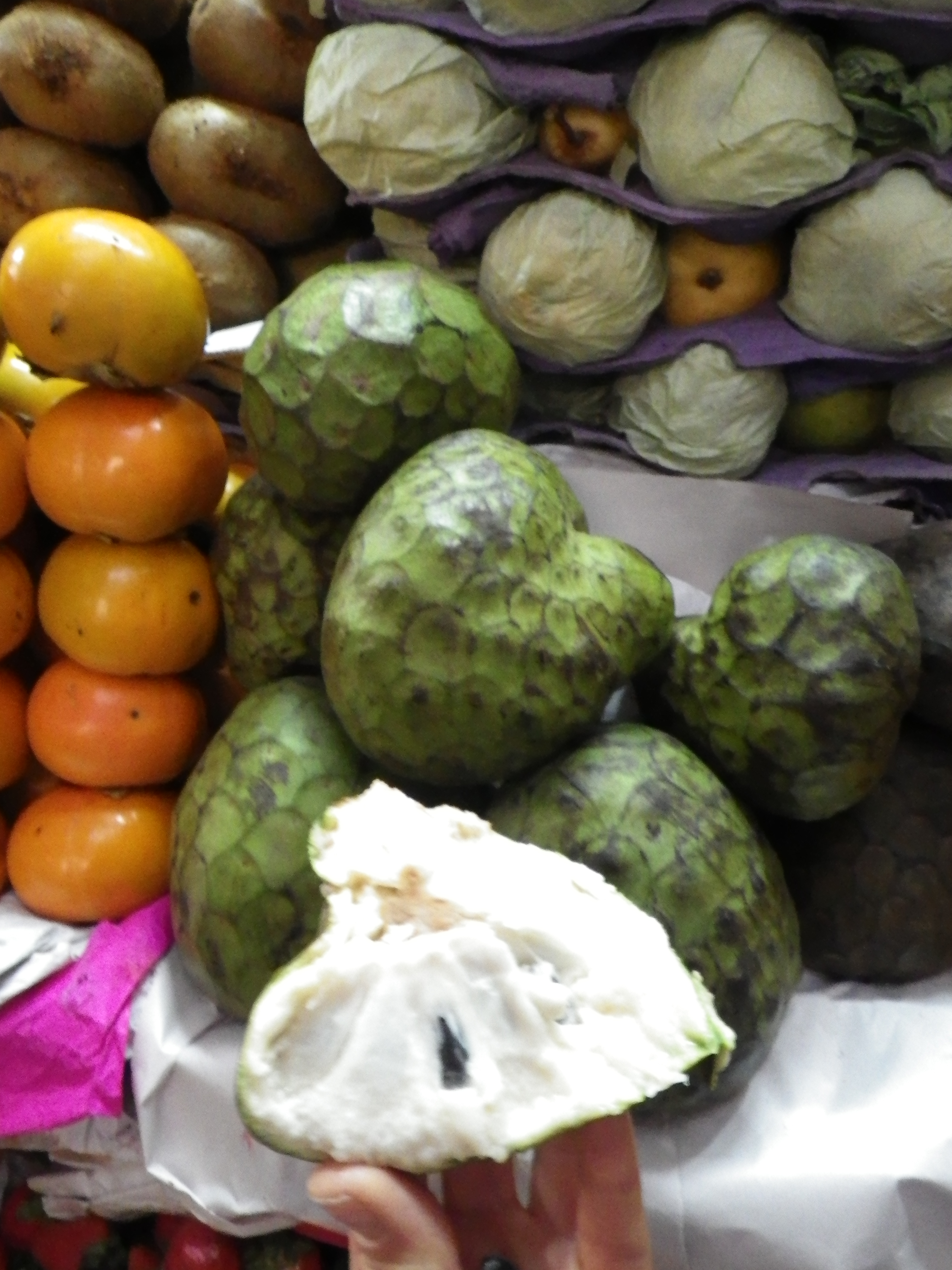
Thankfully too, eating good food is also part of the culture, because I ate a lot! As Milena explained to me, Cochabambinos don’t eat to live, they live to eat. So, to embrace the culture, I tried as much of Bolivia’s delicious food as possible, including (but not limited to):  humintas (like a tamale), saltenas (like an empanada filled with beef, potato, peas, and spices), anticucho (grilled beef heart on a stick), silpancho (thinly sliced beef steak topped with a fried egg served over rice and potato), pata de vaca (cow foot), sopa de mani (peanut soup), sopa de chuno (soup with freeze-dried potato), pastel (a fried, cheese-filled, puffed pastry topped with powdered sugar), boiled and baked banana, api (a sweet warm corn drink), mocochinchi (a sweet dehydrated peach drink), monja (a sweet toasted corn drink), and………cunape (a delicious “bread” made of yucca flour and cheese). I also enjoyed delicious local fruits including pacay, chirimoya, and the sweetest papaya ever!

Along with practicing Spanish and eating, I did get out of the house some and explore the city. I went on a couple of fun bike rides with Daniela and her friends, including a Critical Mass ride to raise awareness of biking as a healthier, cleaner mode of transportation in the city and an adventurous roughly 15-mile night ride to a small town outside of Cochabamba. I also visited Kato and Steve several times and joined Kato’s family to celebrate a family member’s birthday. I enjoyed some local music too. Magda took me to a classical piano concert and Magda’s friend, Freddy, took me to an acoustic guitar concert. On several occasions, Magda and I went to La Cancha, one of the largest markets in Latin America. It’s a fantastic place to walk around as you can buy almost anything imaginable and eat a variety of interesting foods. There are whole sections of gorgeous fresh fruits and veggies, breads, cheeses, raw meats, cooked foods, homemade ice cream (yes, a whole section of just ice cream), fresh flowers, household goods, clothes and shoes, etc. It’s simply amazing. I also got to hang out for a day with my friend, Chris (England), who’d I’d trekked with in Torres del Paine (Chile). He had a stopover in Cochabamba in route further north. We had a great time walking around the city, riding the teleferico (gondola) up to and walking the 1,250+ steps down from the Cristo de la Concordia, the tallest Christ statue in the world (44 cm taller than Rio’s), and eating Bolivian food.

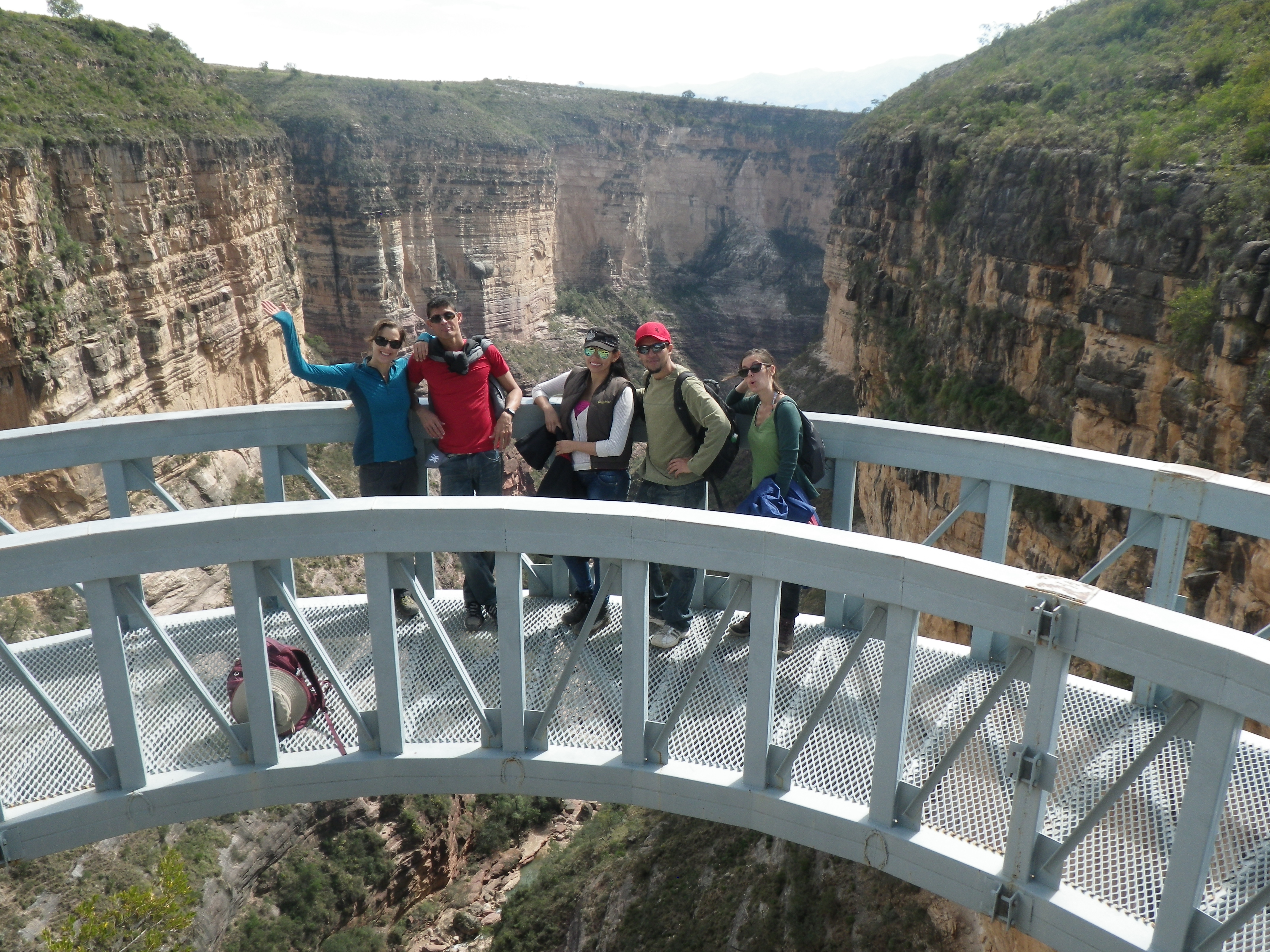
On my last weekend in town, I finally ventured outside of Cochabamba and went to Parque Nacional Toro Toro with Ester’s friends, Delphine (France), Violeta and Benjamin (Cochabamba), and Carlos (Brazil). Toro Toro is Bolivia’s smallest national park but encompasses “high valleys ringed by low mountains whose twisted geological formations are strewn with fossils and dinosaur footprints.” The park also contains the Umajalanta Cavern, part of the largest cave system in Bolivia and home of blind fish; Toro Toro Canyon; and pre-Incan ruins. Our tour guide, Gregory was very knowledgeable of the geology, ecology, and history of the area. He also treated us to several traditional songs accompanied by flute-like instruments, adding to the mystique of the beautiful landscape surrounding us. We spent two full days exploring the park, enjoying interesting rock formations, dinosaur prints, the caverns, and the deeply-cut canyon. Along with great memories of the park, I also unfortunately brought back a bad stomach, perhaps due to the egg sandwiches I had from a market stall or the untreated water I drank from a waterfall (the guide said it was ok!). Whatever the cause, I was laid up for several days, delaying my departure from Cochabamba. Magda was a saint and took great care of me, taking me to the doctor for antibiotics, making me stomach-friendly food, and making sure I didn’t run out of crackers. After 4+ months of traveling, I guess it was time, and thankfully I was “home” and not on a bus. I lucked out!

On the day of my departure, Magda and I went to La Cancha one last time then to an Argentinean restaurant where they were celebrating a national holiday with music, dance, and traditional Argentinean food. It was kind of a funny way to spend my last day in Bolivia, celebrating the Argentinean holiday, but also the perfect way to spend my last day in Bolivia, hanging out with my hostess of 5 weeks and friend, Magda.

Cochabamba is a large, modern city (population 630,000+) located in a valley in the beautiful Andes mountains. Unfortunately due to its location in a valley and the large number of cars & buses in town, Cochabamba’s air quality is poor. However, this is overshadowed by the lovely natural surroundings, delicious food, amazing shopping, and wonderful people. For me, Cochabamba will always be a special place because of the wonderful new friends I made while there and the experiences we shared. It’ll also always be in my memories for all of the delicious food I ate while there, including my new favorite fruit, chirimoya! Thanks Cochabamba, from now on, I will live to eat good food!

Here are a few pictures. Click the link too see the full photo album:  https://goo.gl/photos/Tf2KFHpNvGN7C95A6

Enjoy!

IMGP0825
Enjoying api and pastel.
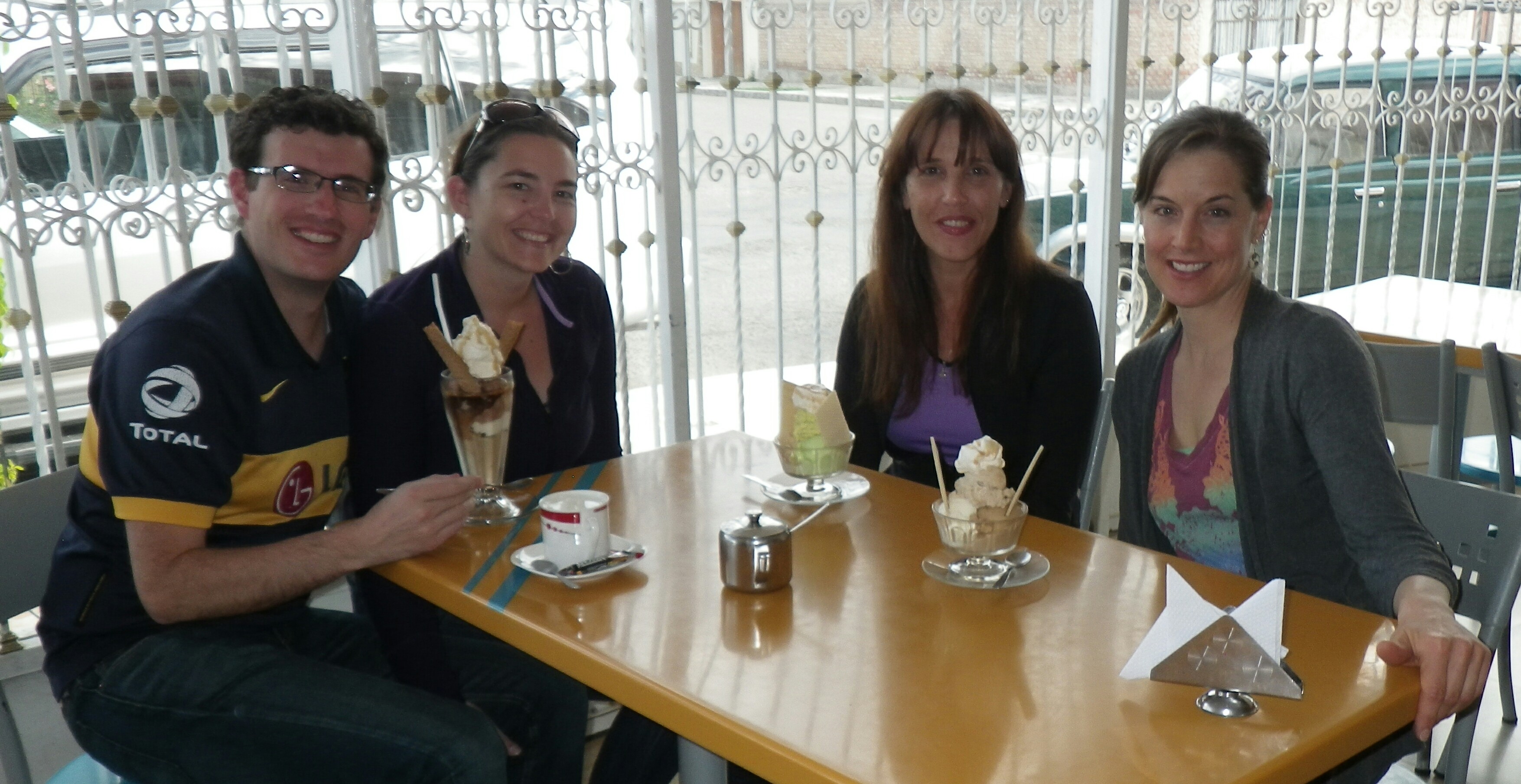
Helado with Eric, Milena, and Daniela.
Helado with Milena, Eric, and Daniela.
IMG_1711
A moment of love from Kato and Steve’s cat. (The calm before the storm for this crazy gata).
IMGP0927
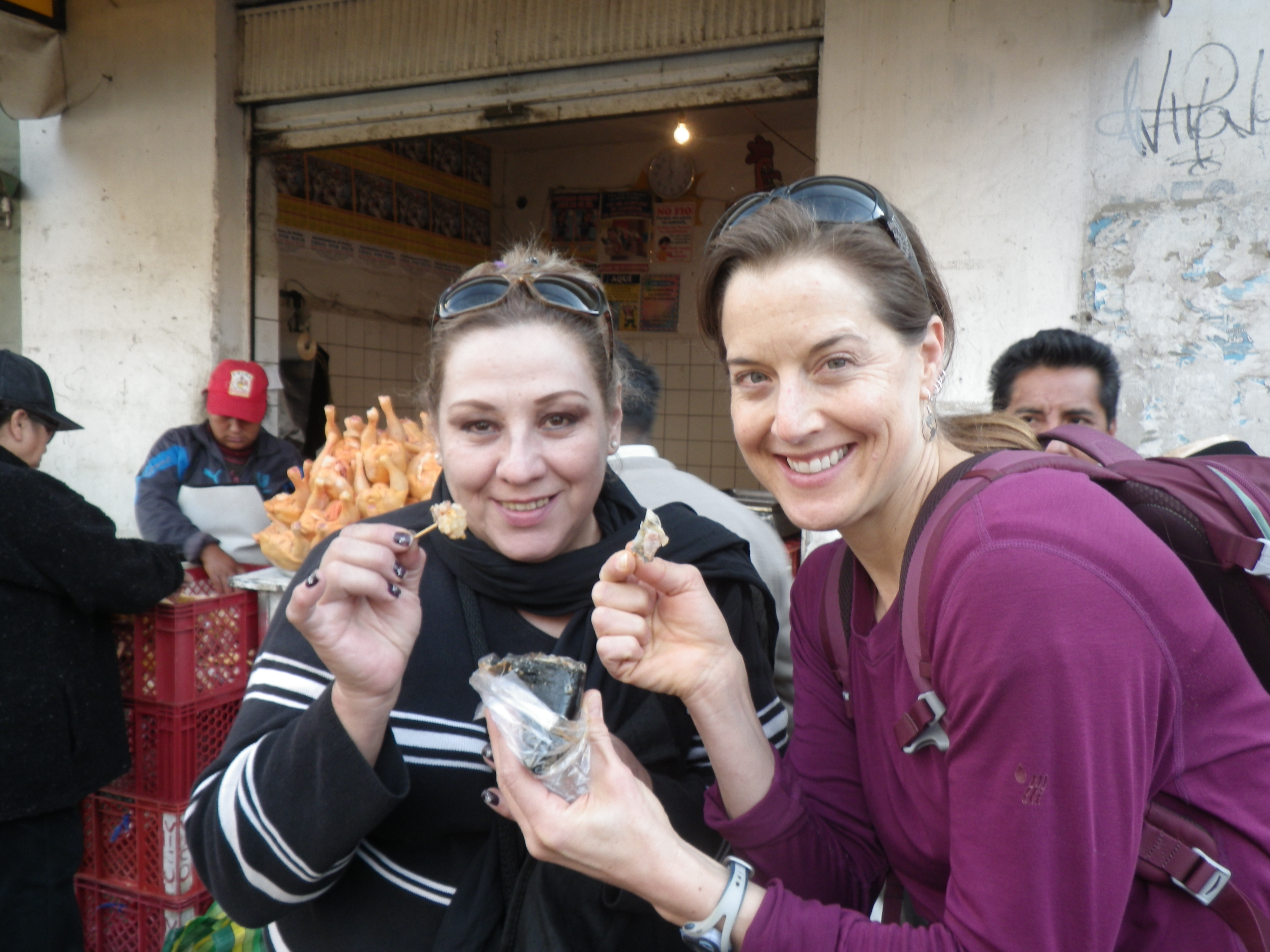
Enjoying pata de vaca (cow foot) at La Cancha market with Magda.
IMGP0945
My lovely room at Magda’s house.
IMGP0967
Magda’s wonderful family.
IMG_1791 (1)
Chilling wih Frederico.
IMGP0965
Spanish class with Ester.
IMGP0847
Cristo with Chris. Ha!
IMGP1093
Exploring Toro Canyon with friends.
IMGP1163
Hanging out with Magda – last day in town. So fun!
IMGP0879
Chirimoya, my new fav fruit!

Travel notes:  try all traditional Bolivian foods, including, but not limited to, those mentioned above; the tap water in Bolivia is NOT potable (must be treated).

Argentina: Buenos Aires (Apr 5 to 13, 2015)

After about five and a half weeks exploring Patagonia (see previous posts for Ushuaia, Argentina; Torres del Paine, Chile; El Chalten, El Bolson, and Bariloche, Argentina), it was time to head north to Buenos Aires (Argentina). It was difficult to leave Patagonia (a region that had been on my bucket list for awhile) but I was satisfied with my explorations, at least for now.

Getting to Buenos Aires

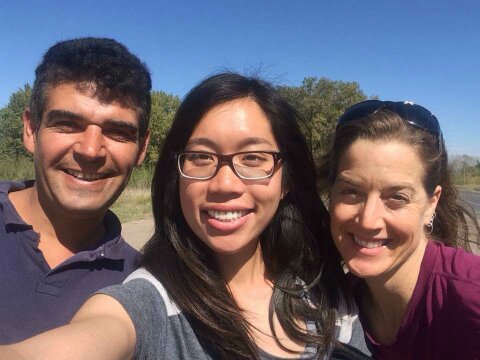
On my last day in Bariloche, my friend, Candice (US), who’d I trekked with in Ushuaia and reconnected with in Bariloche, mentioned that she too was heading to Buenos Aires, but she planned to…..gasp…..hitchhike there. Hitchhiking is very common in Patagonia and, according to many travelers, very safe. As I was intrigued by the adventure of hitchhiking and Candice was a seasoned pro, I decided to…..gasp…..go for it. So, I exchanged my last $39 US dollars for Argentinean pesos (the ATMs in Bariloche had run out of money that Easter weekend) and Candice and I said farewell to our friends Carrie (US) and Dave (England). I was going to miss Dave’s laugh and sweet disposition after traveling with him for almost three weeks. Before we left, Carrie took our picture. You know, in case we needed a “last seen” photo. I also promised to check in along the way via my SPOT GPS tracker, which also has a “SOS” button that when pushed alerts rescuers to your exact location (or at least the location of your SPOT). So, with safety precautions completed, loaded with snacks and a cardboard sign, we set out to hitch the 960+ miles to Buenos Aires.

Candice knew the best spot on Ruta 40 for us to set up thanks to Hitchwiki, a website where hitchhikers share info on how to get to/from various points. After a 20 minute bus ride and a 20 minute walk to get to “the spot”, we held up our cardboard sign which read, “Buenas Aires, se habla espanol” and stuck out our thumbs. We expected to wait hours, but were picked up after only 30 minutes by a guy who was going almost all the way to Buenos Aires. What unbelievable luck!

Our driver, Marro (Argentina), was on his way home to his wife and kid in Buenos Aires. He and his wife were expecting their second baby soon. The proud husband/father shared lots of photos of his family with us along the journey. He worked as a bee keeper and had a cool bee hive tattoo on his arm. The scenery was gorgeous for the first several hours, following the Rio Negro as it wound through a wide valley topped with tall peaks and spires. Throughout the day, we all snacked on the food Candice and I had brought, including pieces of the giant chocolate Easter egg from Bariloche, and chatted. Thankfully, Candice speaks Spanish well as Marro spoke no English and my Spanish was basic to say the least. Marro seemed to enjoy our company and was a great tour guide, pointing out various landmarks along the way. At about midnight, we stopped at a hotel for the night and shared a room with three twin beds. We hit the road early the next morning. After about 7 hours, it was time for our journey with Marro to end. He offered to take us to a nearby train station but given our good luck so far, we decided to try hitching the last ~250 miles to Buenos Aires. So, he dropped us off along a wide stretch of dusty road, we said farewell to our very generous host, and up went the cardboard sign.

After only about an hour, we lucked out again! We got picked up by two brothers (Argentina), Sebastian and Luciano, on their way home to Buenos Aires after a weekend of camping and trekking. Their car was tiny and already loaded with their gear but we crammed ourselves and our backpacks in. They were a gregarious pair of 20-somethings who spoke English well so the conversation was lively and fun during the drive. As we neared Buenos Aires, the guys invited us to stay at their house, explaining that they were planning to travel later in the year and wanted to gain some travel karma by picking us up and offering us housing. I love the traveler mentality and need to pay it forward when I’m back home! It was a very nice offer, but I was staying with friends in Buenos Aires so declined. After hugs goodbye to the guys and Candice, who was continuing on with them, I went to see my friends.

In Buenos Aires

At about 10:30 pm, after roughly 16 hours on the road that day, I knocked on the door and finally got to see the smiling faces of my friends, Kelly and Myles! I’d last seen them in 2014 for a fun weekend with our friends, Dave and Nicole, in Scottsdale, Arizona. After a shower to wash the road dirt away, we spent the evening chatting and drinking wine. It felt like home sweet home.

So what did I do for 7 days in Buenos Aires? I relaxed, hung out with my friends, ate, drank, and…….relaxed, hung out with my friends, ate, and drank.

After all the trekking, exploring, and moving from place to place I’d done since leaving home January 27, 2015, it was perfect! I’m not kidding, I was a couch potato for the first 2 days then again on various days throughout my visit. I hope my ass didn’t leave a permanent dent on the side of the couch that I dominated for most of my stay. It was great just hanging out with Kelly and Myles, drinking coffee in the morning, chatting, watching TV while messing around on wifi (emailing, messaging, and calling my peeps) and checking in on Ansel and Petal, the cutest miniature goats ever (see for yourself:  https://instagram.com/anselandpetal). We also ate yummy snacks, including tortilla chips and spicy salsa (nonexistent in Patagonia), drank delicious wine, beer, and cocktails, and watched the sunset from the balcony of their fabulous 12th floor apartment overlooking the Palermo Hollywood area of Buenos Aires. All this and the wifi was strong. Why would I leave the apartment?

But the sights and sounds of Buenos Aires beckoned, and Kelly and Myles got tired of my ass on their couch (not really) so I did get outside. To get my blood flowing, Kelly took me to her spin class to get my ass kicked, in Spanish, by a cute, petite, hardcore (and very nice) spin instructor. After that, I was motivated to use the gym, a few times at least, on the 16th floor of Kelly and Myles’ apartment. (Hello old friend, I’ve missed you.) As for sights, they took me to Boca, a colorful barrio famous for its brightly painted buildings, street art, tango dancing, good food, and for being the home of world renowned football club, Boca Juniors. After walking around awhile, we had lunch at their favorite parrilla (grill) and sipped cold beers. We also went to San Telmo barrio to explore Feria San Telmo, a street fair “composed of 270 stands and visited by 10,000 people every Sunday.” There were stands on both sides of the street for 8? 10? blocks, as far as the eye could see. It was huge! Being Sunday Bloody Sunday, Kelly made us excellent spicy bloodies before we headed into shopping madness. Yum! Along with sight seeing, they also took me to some of their favorite local eateries during my stay:  Fukuro Noodle Bar for a noodle bowl, The Burger Joint for an awesome burger, and Sudestada for scrumptious Asian fusion. I was also treated to Kelly’s delicious homemade fajitas. Muy rico!

For a night on the town, I reconnected with Candice and Florencia, a native of Buenos Aires, who I’d trekked with for a week in Torres del Paine (Chile). Florencia got us tickets to see a band. We met at a brewery for a platter of deep fried everything and craft beer then went to the club, Trastienda, to see Massacre, an Argentinean rock band with a theatrical flare. It was cool to rock out with the locals (far back from the mosh pit of course). Afterwards, Florencia took us to Rey de Copa, a low key, Moroccan-themed bar where the bartenders made cocktails almost too pretty to drink. It was so great hanging out with these two fabulous ladies!

I’m glad that in between my couch potato days, I explored my surroundings a bit. Buenos Aires is a huge (population:  3+ million) modern city with lots to offer (i.e, good food, colorful sights and people, culture, lots of shopping, sports, recreation). But really I didn’t go there to see the city, I went there to chill out and hang out with my friends. So for me, my time in Buenos Aires was perfect.

Here are a few pictures. Click the link to see the full photo album:  https://goo.gl/photos/rKh5SywraGQsEzhA8

Enjoy!

IMGP0697
At “the spot” outiside Bariloche. Only 960+ miles to go!
With Marro, our host for part 1 of the journey.
Enjoying churipan with Sebastian and Luciano, our hosts for part 2 of the journey.
Made it! Hanging with my good friends, Kelly and Myles, in Buenos Aires!

Travel notes:  recommend all of the restaurants and areas mentioned above; tap water in Buenos Aires is potable (no treatment needed).

Argentina: Bariloche/Parque Nacional Nahuel Huapi (Apr 1 to 5, 2015)

How did I spend 5 days in San Carlos de Bariloche, Argentina, the chocolate capitol of Argentina? Hanging with friends, eating chocolate, and……trekking, of course!

Bariloche is only a short, 2-hour, bus ride from El Bolson, Argentina (see previous post). It’s a large town (population 108,000+) located in the lakes district. It’s a destination for tourists and locals given its variety of restaurants, bars, and shops, including numerous chocolate shops, and given its location on the shores of Lago Nahuel Huapi, and its proximity to the mountains which offer skiing, trekking, and climbing.

Once in town, I met up with Dave (England), who I’d been traveling with for the previous two weeks in El Bolson and El Chalten. He’d taken an earlier bus from El Bolson. We enjoyed a very tasty, FREE spaghetti dinner at our hostel (small joys!) then met Kim (US) and Shawna (Canada) at a nearby bar. I’d met Kim at my hostel in Punta Arenas, Chile, in early March. I’d run into her and her friend, Shawna, while waiting for the bus into downtown Bariloche. The four of us met up that night for a few Argentinean beers.

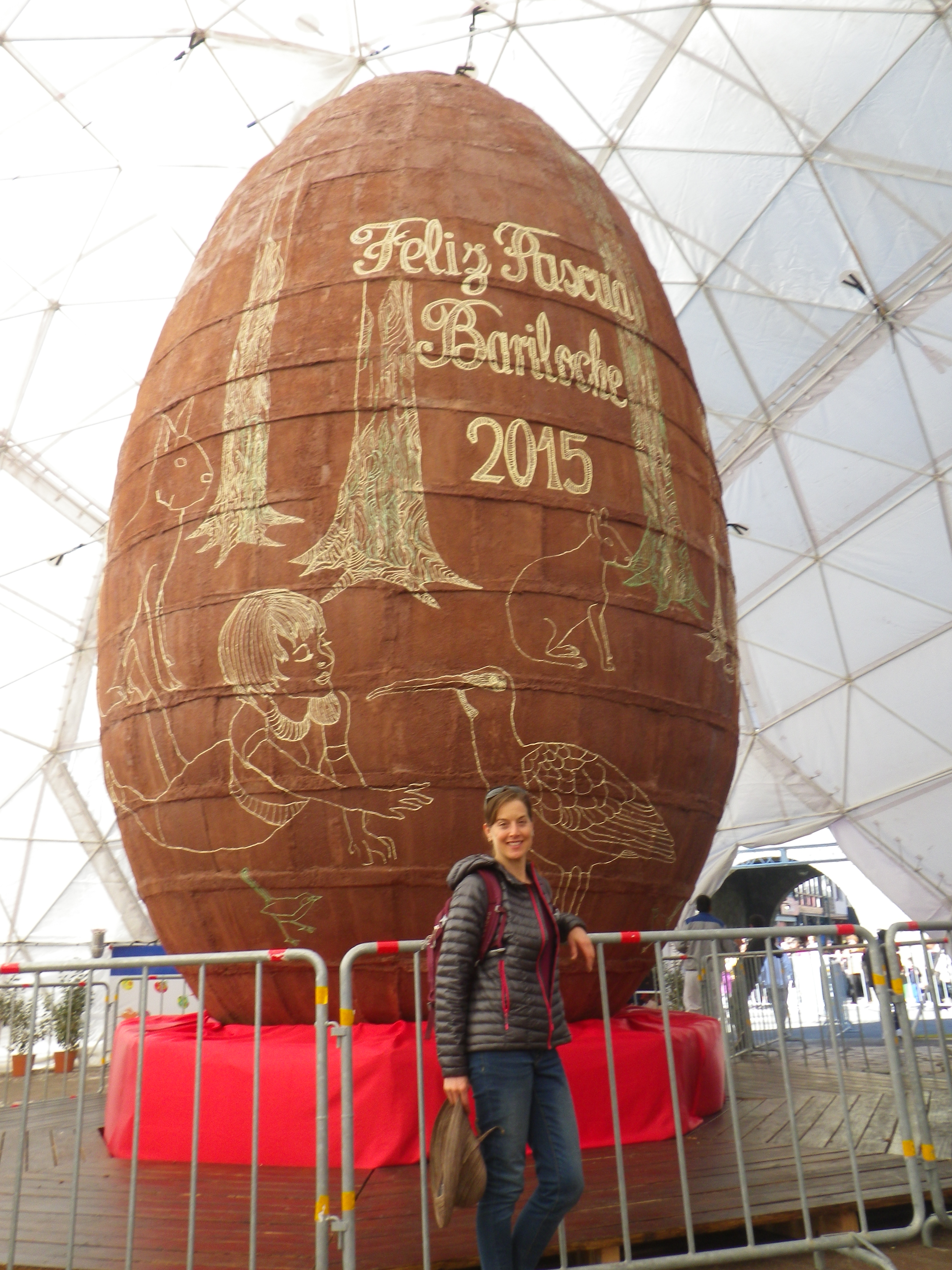
The next day Dave and I changed hostels since the one were at was booked for the night and to join my friends, Carrie, Candice, and Don who I’d trekked and hung out with in Ushuaia (at the tip of Argentina) in February (just before my Antarctica trip). Once settled, Dave and I walked around town and discovered we’d totally lucked out because we happened to be in the chocolate capitol of Argentina for Easter weekend! Every year, to celebrate Easter, various chocolate producers send their students to Bariloche to construct the world’s largest handmade chocolate Easter egg which is cracked apart Easter Sunday and shared with the crowd. Per the internet, this year…”The giant egg fed 50,000 people and was made from 8,000 kilograms of chocolate. The titanic Easter treat stood eight and a half metres high and was six feet across in diameter.” They also construct the world’s longest chocolate bar, spanning two blocks of the main street, which is also shared with crowd. In addition to chocolate-mania, the weekend’s festivities included live music and performances all day Friday and Saturday.

Wow! All of this happening AND there was good trekking nearby. I wanted to eat chocolate (with good red wine, of course) AND go trekking but my time was limited. So, after much deliberation over a few beers, Dave and I devised a plan:  we’d trek for two long days then return to town in time to enjoy the Easter festivities. Later that day, the Ushuaia crew finally showed up at the hostel. It was so great to see them! Candice and Don planned to leave the next day but Carrie was staying in Bariloche for several days so decided to trek with us.

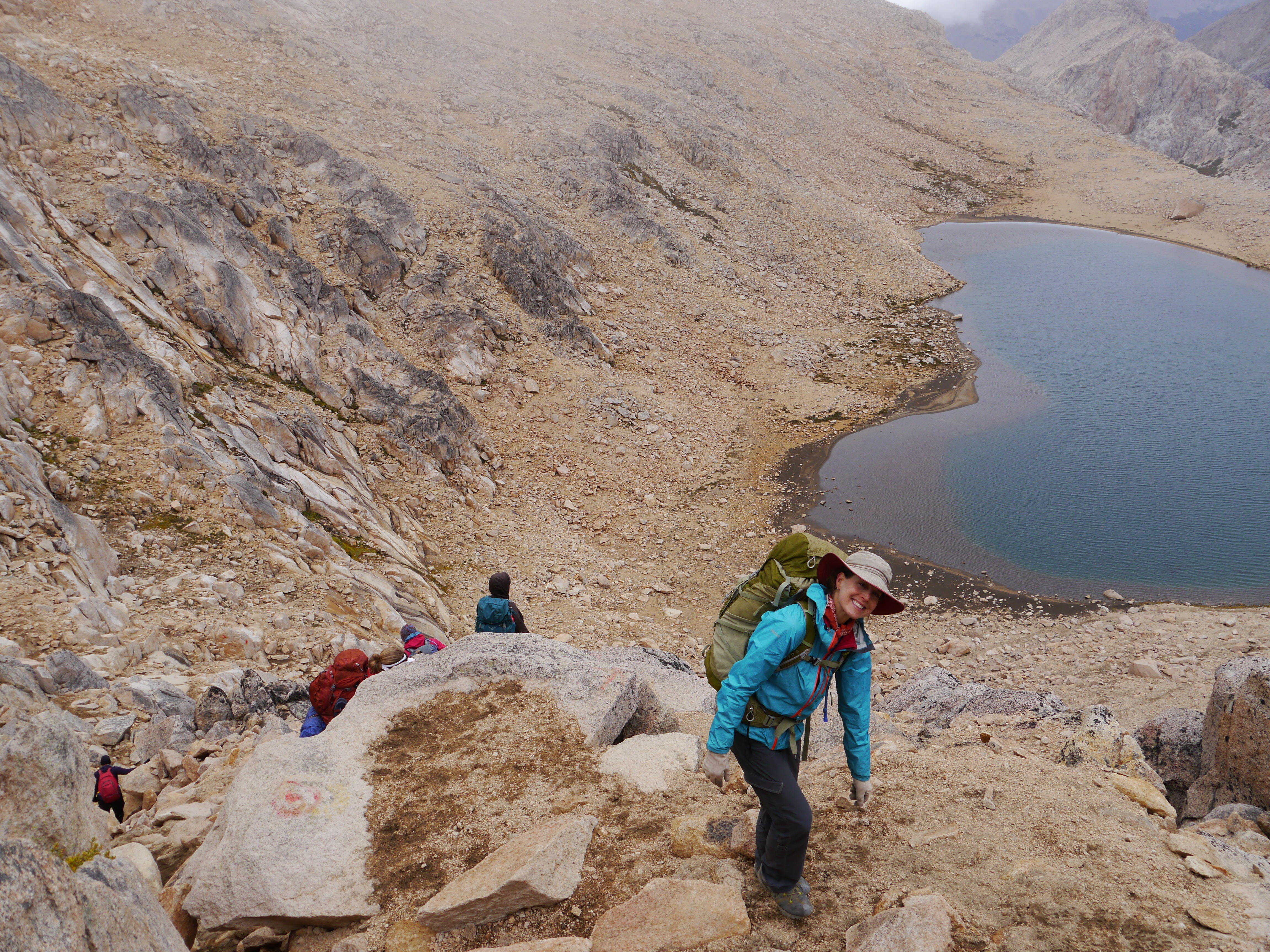
On Day 1 of our trek in Parque Nacional Nahuel Huapi, we woke up super early for the 30-minute bus ride to the trailhead. We planned to hike ~13 mi (20.5 km) to Refugio San Martin. The first part of the trail was along Arroyo Van Titter, so we had lovely views of the river as well as Lago Guiterrez, just south of us. We headed gradually uphill to arrive at Refugio Frey, a wood/stone cabin (similar to those I described in my post about El Bolson, Chile) located on the shores of a glacial lake surrounded by mountains. We watched some climbers make their way up the vertical wall of a nearby spire while we ate. After lunch, we climbed up and over two passes to finally arrive at Refugio San Martin, another wood/stone cabin on the shores of a glacial lake surrounded by mountains. Such gorgeous scenery! And thank goodness because it made it easier to deal with the rain that had begun as we arrived. There was no shelter for the tent campers and cooking in the refugio was not allowed, so we cooked our dinner in the rain then went inside to eat. As we sat there eating our backpacker food (i.e., a cheap packet of soup with pasta), everyone else enjoyed a beautiful-looking paella made by the refugio staff. We didn’t reserve and pay for a meal at the refugio ahead of time, so no paella for us! Oh well, a least we were warm and dry. We began Day 2 by packing up wet tents and starting the roughly 10-mi (16.5-km) hike back in soggy weather. We hiked down a gorgeous valley along Arroyo Casa de Piedra. The trail was steep for the first few hours then became a more gradual descent. Once at the end of the trail, we still a ways to go to get to the bus stop. After ~2 hrs of walking in the heat and dust, we finally caught the bus back to town.

Back at the hostel, we ran into Candice! She’d decided to stay in town for the Easter festivities. So, after a few hours to clean up and rest, Dave, Carrie, Mathieu (France), who’d we’d met at the hostel, and I went to the main plaza to met up with Candice and check out some live music. We didn’t find Candice but the four of us had fun listening to the Argentinean band (who’s name I can’t recall) then having a few beers at a nearby bar. The town was crowded but the vibe was festive and fun. Most of the crowd appeared to be Argentinean and Chilean. The next day was Easter so, Dave, Carrie, Coullaud, and I headed to the main plaza again to taste a piece of the world’s largest chocolate Easter egg. It was only 9am but everyone was out to enjoy a clear, sunny Easter day. The line for chocolate spanned several blocks along the main street, around the corner, down two blocks, around another corner, then along several more blocks along the waterfront. It was a long line. After a while, Coullaud left to go trekking but Candice joined us. During the wait, we chatted, did some good people-watching, and had some matte (traditional Argentinean tea) with our neighbors in line. After an hour and a half, we were rewarded with a large carton of chocolate which we ate sitting under a tree in the plaza. Honestly, the chocolate wasn’t that great (very sugary) but getting it was part of a fun day hanging with great friends and a great end to a fun time in Bariloche!

Here are a few pictures. Click the link to see the full photo album:  https://goo.gl/photos/zAxuEcfb8NLhRmDZ7

Enjoy!

On the way to Refugio San Martin.
The world’s largest homemade chocolate Easter egg!

Travel notes: recommend Punto Sur Hostel (friendly staff, free dinners on some nights) and The Hostel House (friendly staff, large communal kitchen); tap water in Bariloche and water in the national park is potable (no treatment needed).

Argentina: Rio Azul Natural Protected Area/El Bolson (Mar 25 to Apr 1, 2015)

How did I spend 7 days in El Bolson, Argentina? Well, after multiple days of amazing hiking but no/crappy wifi in El Chalten, Argentina (see previous post) and a 22+ hr bus ride to get from El Chalten to El Bolson, I spent the first day at my cozy hostel glued to my cell phone and tablet basking in good wifi and catching up with family and friends. But after that, trekking, of course!

El Bolson is a small town (population 13,000+) with a variety of restaurants, cervezarias, and shops. It’s known as a hippie town for the variety of hand-made crafts sold throughout town and at a permanent artisan market held three times a week. Given the lakes and mountains surrounding the town, El Bolson is most well known for fishing, rafting, climbing, and….trekking. While there, I trekked in the Rio Azul Natural Protected Area (part of the world’s largest UNESCO temperate forest biosphere reserve).

For my first trek, Yara (Israel), who I’d met at the hostel the night before, and I dayhiked up Cajon del Azul, located along the crystal-clear waters of the Rio Azul. From the trail, we could see smoke from the arson-set fire in Parque Nacional Los Alerces, south of El Bolson. Fortunately, the winds favored us and we couldn’t smell the smoke. Later that day, Dave (England), who I’d trekked with in Torres del Paine and El Chalten, arrived and we went out for a beer at one of El Bolson’s many cervezarias.

The next day, Dave, Luca (Italy), whom we met at the hostel, and I began a 4-day trek up the Arroyo del Teno river valley to the Hielo Azul glacier, over a steep ridge to Cajon del Azul, over another steep ridge to another river valley (Dedo Gordo?), then to Wharton, a small town north of El Bolson. Along this route, there are refugios, log and/or stone huts offering, at a minimum, a kitchen/common area with a wood-burning stove, bathrooms, drinking water, beds, and a campground. Some even offer hot showers, hot meals, and cerveza casera (home-made beer brewed onsite). On Day 1, we trekked to Refugio Hielo Azul, located in a gorgeous, picturesque valley surrounded by mountains. It was so lovely, we decided to dayhike in the area on Day 2 and stay there a second night. On Day 3, we trekked to Refugio Cajon del Azul where we stopped for lunch. After lunch, Dave and I bid farewell to Luca who was returning to El Bolson, and we continued on to Refugio El Retamal, also in a picturesque valley surrounded by mountains. At each refugio, after we set up our tents and ate dinner at camp, we spent the rest of the evening in the warm, cozy hut playing dice games (Farkle and the Argentinean version, Cinco Mil) and drinking cerveza casera. Talk about luxury backpacking! On Day 4, we completed our trek and decided to hitch hike (a first for us both) back to town. With thumbs out, we started walking, stopping periodically to eat wild blackberries growing on the side of the road. Either we looked odd or none of the dozen cars that passed us where going to town because no one stopped or even slowed down. Finally, after an hour and a half of walking (this in addition to the miles of trail we’d walked earlier), we were picked up by a very nice Chilean couple on vacation. Thank goodness because we were still quite a ways from anything (i.e., bus stops, taxis, or phones).

Back in El Bolson, we decided to spend the last night in town at a hostel that also had a campground. It was like camping in a unkept city park (with small bits of trash, cigarette butts, and street dogs everywhere) but it was super cheap (about $8), the showers were hot, and there was good wifi in the reception area. As we walked into the hostel, I was very pleasantly surprised to see Chloe and Toby, an American couple I’d met at my hostel in Puerto Arenas (Chile) and had run into on the Torres del Paine trek (Chile) and in El Chalten (Argentina). They and their dog were on a multi-year road trip from California to the tip of Argentina and back. Later that night, Chloe, Toby, and Luca, came to our campsite and we spent the evening chatting, eating snacks, and drinking lots of good, cheap Argentinean wine. It was good times with good friends in a shitty little campground. Ha! And it was a great last night in El Bolson after trekking in the gorgeous mountains and valleys surrounding town.

Here’s a teaser picture. Click the link to see the full photo album:  https://goo.gl/photos/1b4xXkm7cwwfyRFLA

Enjoy!

2015-03-28 17.28.11

Travel notes: recommend La Casa de Arbol Hostel (good communal kitchen, friendly, helpful staff); don’t recommend Patagonia House Hostel (the camping area is trashy); bountiful beautiful veggies and fruit, tap water in El Bolson and river water in the natural area is potable (no treatment needed).

Argentina: Parque Nacional Los Glaciares/El Chalten (Mar 19 to 24, 2015)

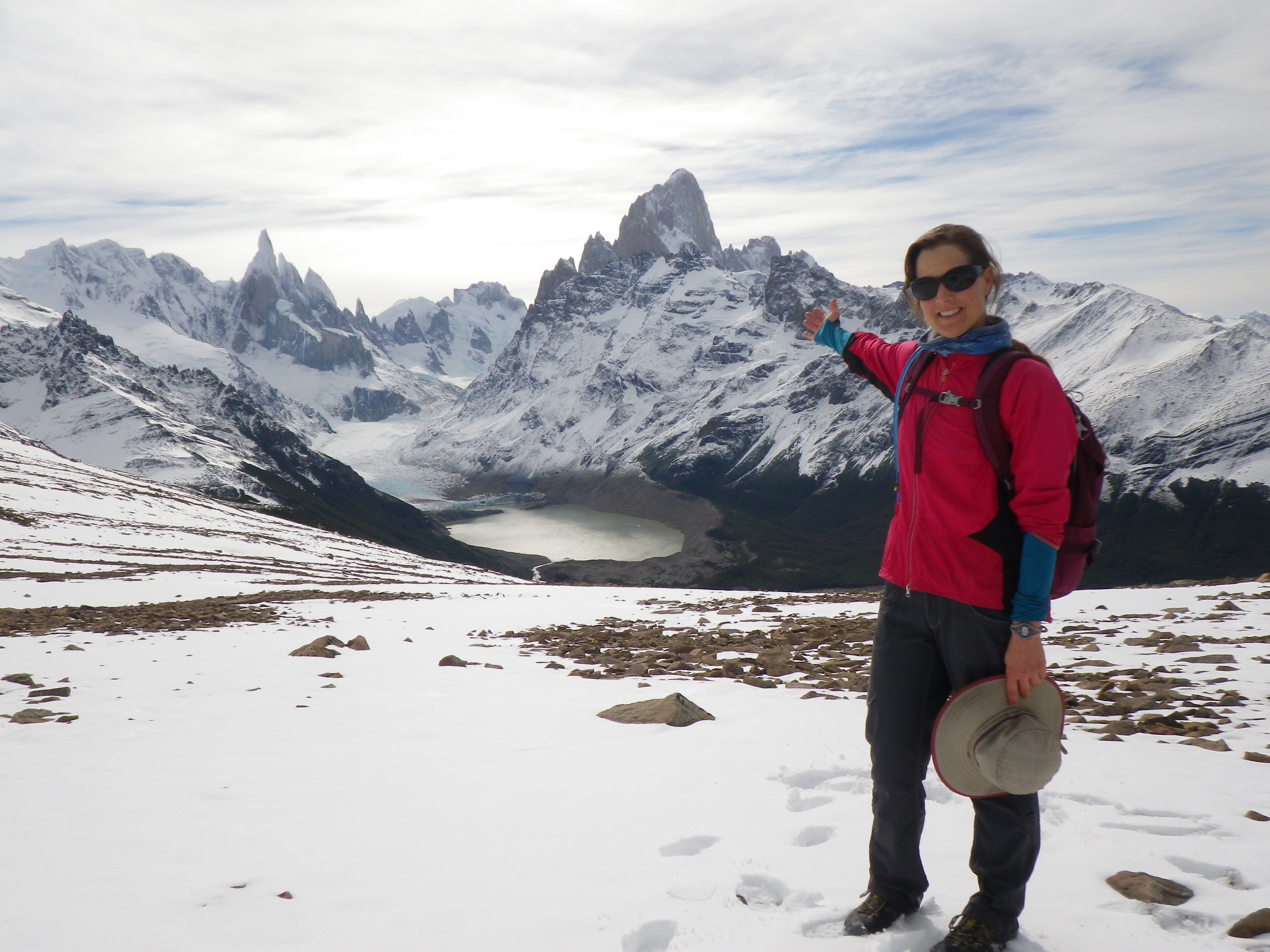
How did I spend 6 days in El Chalten, Argentina, the self-proclaimed trekking capitol of the country? Trekking, of course! After a few days of rest in Puerto Natales, Chile, recuperating from the 9-day Torres del Paine trek (see previous post) and a 8-hr bus ride to get to El Chalten, I was ready to hit the trail. It turned out that Dave (UK), who I’d befriended on the Torres del Paine trek, was heading to El Chalten to hike as well, so we took the bus and trekked together. Besides being a charming small town (perm. population 1,100) with a variety of restaurants and cervezarias, El Chalten is located in the Rio de las Vueltas river valley and surrounded by mountains (hence the trekking and climbing reputation). After just a short walk from town, you enter Parque Nacional Los Glaciares (no entry fee and free camping) and have access to multiple trails. For our first hike, Dave and I dayhiked the 6.8-mi (11-km) Loma del Pliegue Tumbado trail, the only trail in the park where you can view the peaks of Las Torres (10,177 ft (3,103 m)) and Fitz Roy (11,171 ft (3,405 m)) together. From the mirador (view point), the panorama of snow-covered peaks, including the two famous peaks, was spectacular, only made better by the sight of Andean condors soaring overhead. The next day, we started a 3-day, ~22 mi (35 km) loop trek where we watched the numerous peaks, including the Las Torres and Fitz Roy peaks, light up with the rays of the rising sun. Spectacular! All this and we enjoyed amazing weather (sun, light wind, and no rain) during the entire stay in El Chalten! It was a much-needed respite from the cold, windy, wet weather we had in Torres del Paine and Puerto Natales. Back from the trek, I enjoyed the best homemade almond tart ever and spent the rest of that day and the next relaxing at my hostel, chatting with fellow travelers, planning my next destination with glasses of more good, cheap Argentinean wine, and enjoying the views surrounding the charming little town. It’s no wonder that El Chalten is a mecca for trekkers and rock climbers (yes, people climb those peaks!).

Here’s a teaser picture. Click the link to see the full photo album:  https://goo.gl/photos/jP2VvvThPnxygVUY8

Enjoy!

2015-03-20 16.10.04
View of the Las Torres and Fitz Roy peaks from the Loma del Pliegue Tumbado trail

Travel notes: recommend Travelers Hostel Patagonia (good communal kitchen and spaces, friendly staff, many large windows, great view); the panaderia about a block from the hostel on the opposite side of the street has an amazing almond tort (and other super yummy baked goods); recommend buying groceries, especially produce, elsewhere (cheaper, better selection and quality); tap water and water in El Chalten and in the park is potable (no treatment needed).